Introduction to GFRP Rebar in Marine Construction
Marine construction presents some of the most demanding challenges for concrete reinforcement. Saltwater exposure, tidal cycles, wave action, and airborne chlorides create an aggressively corrosive environment that rapidly degrades traditional steel reinforcement. GFRP rebar marine construction has emerged as the definitive solution to these challenges, offering engineers and contractors a non-corrosive, high-strength alternative that dramatically extends the service life of marine concrete structures.
Unlike conventional steel reinforcement, Glass Fiber Reinforced Polymer (GFRP) rebar is inherently immune to chloride-induced corrosion. This makes it the ideal reinforcement choice for a wide range of marine infrastructure projects, including commercial ports, cargo terminals, passenger piers, offshore platforms, marina facilities, and waterfront developments. As global shipping and maritime trade continue to expand, the demand for durable, low-maintenance marine structures has never been greater.
This article provides a comprehensive overview of GFRP rebar marine construction applications and solutions. We examine why steel fails in saltwater environments, how GFRP rebar performs under marine exposure conditions, and the specific benefits it delivers for piers, docks, harbors, offshore platforms, and waterfront infrastructure. We also cover installation best practices, compare GFRP against steel reinforcement, and review the expected lifespan of GFRP rebar in marine construction projects.
Whether you are a structural engineer designing a new cargo terminal, a port authority planning a major renovation, or a waterfront developer seeking corrosion-free reinforcement, understanding GFRP rebar for marine structures is essential knowledge for modern marine engineering.
Why Traditional Steel Fails in Saltwater Marine Environments
The Corrosion Mechanism in Marine Environments
Steel reinforcement in marine concrete structures fails primarily through chloride-induced corrosion. Saltwater contains approximately 19,000 mg/L of chloride ions — levels that overwhelm the protective passive layer on steel rebar within months or years of exposure. Once corrosion initiates, the resulting rust occupies up to six times the volume of the original steel, generating expansive internal stresses that crack and spall the surrounding concrete.
Accelerated Deterioration Factors
Several factors unique to marine construction accelerate steel reinforcement deterioration:
- Tidal zone exposure: Alternating wet-dry cycles in the splash and tidal zones concentrate chloride ions through evaporation, creating corrosion hotspots at the waterline.
- Airborne salt spray: Marine structures within 1-2 km of the coastline are exposed to windborne salt particles that penetrate concrete porosity.
- Freeze-thaw cycles in cold marine climates: Combined with salt exposure, freeze-thaw action accelerates concrete cracking and delamination.
- Structural flexing from wave loads: Cyclic wave and berthing impact loads cause micro-cracking in concrete, opening pathways for chloride ingress.
- Biological activity: Marine organisms and biofouling can create localized chemical environments that further promote corrosion.
Economic Consequences of Steel Corrosion
Corrosion damage in marine concrete infrastructure imposes enormous economic burdens worldwide. Studies by the National Association of Corrosion Engineers (NACE) estimate the annual global cost of corrosion in marine and port infrastructure exceeds $30 billion. Repair and rehabilitation of corrosion-damaged marine structures typically costs 3-5 times the original construction cost, with many structures requiring major intervention within 15-25 years of construction.
For marine port authorities, terminal operators, and waterfront developers, the cycle of repair, cathodic protection installation, and eventual replacement represents a perpetual maintenance burden that drives up operational costs and reduces facility availability. GFRP rebar for saltwater environments eliminates this corrosion cycle entirely, providing a permanent solution to the marine corrosion problem.
GFRP Rebar Performance in Saltwater Environments
One of the most critical considerations for marine engineers is understanding how GFRP rebar performs in saltwater environments. Unlike steel, GFRP rebar is manufactured from glass fibers embedded in a vinyl ester or epoxy resin matrix — materials that are inherently chemically inert and immune to chloride attack.
Chemical Resistance Properties
GFRP rebar does not rust, oxidize, or undergo electrochemical corrosion when exposed to saltwater. Laboratory testing per ASTM D570 and ASTM D696 shows that GFRP rebar absorbs less than 0.5% moisture by weight after 24-hour immersion in seawater, and exhibits no degradation of mechanical properties after extended exposure to saline solutions, alkaline concrete pore water (pH 12-13), or sulfate-rich marine environments.
Mechanical Performance Under Marine Exposure
Extensive research published in the Journal of Composites for Construction and ACI Structural Journal confirms that GFRP rebar retains 85-95% of its tensile strength after 10,000 hours of accelerated saltwater exposure, equivalent to decades of service life in marine conditions. The key mechanical properties relevant to marine construction include:
| Property | GFRP Rebar | Significance in Marine Construction |
|---|---|---|
| Tensile Strength | 700-1,200 MPa | Exceeds Grade 60 steel with no yield point |
| Modulus of Elasticity | 40-60 GPa | Lower than steel — requires modified deflection design |
| Bond Strength | 12-20 MPa | Excellent bond with marine-grade concrete |
| Density | 1.9-2.2 g/cm³ | 75% lighter than steel — reduces structural dead load |
| Thermal Expansion | 6-10 ×10⁻⁶/°C | Closely matches concrete — minimizes thermal stress |
Long-Term Durability Data
Field studies of GFRP-reinforced marine structures over 15-20 years confirm that GFRP rebar in saltwater environments maintains its structural integrity with no loss of cross-section, no corrosion products, and no degradation of bond to concrete. This zero-corrosion performance is the single most important advantage of GFRP rebar for marine concrete reinforcement, as it directly addresses the primary failure mechanism of steel-reinforced marine structures.
The combination of chemical inertness, high tensile strength, and lightweight handling makes GFRP rebar the specified reinforcement for an increasing number of marine infrastructure projects worldwide, from tropical harbors to Arctic offshore platforms.
Key Benefits of GFRP Rebar for Marine Structures
Engineers and owners choose GFRP rebar for marine structures because it delivers quantifiable advantages across the full lifecycle of marine concrete infrastructure. Here are the critical benefits of GFRP rebar for marine structures:
Complete Corrosion Immunity
The most significant benefit of GFRP rebar for marine structures is absolute immunity to chloride-induced corrosion. Unlike epoxy-coated steel, galvanized rebar, or stainless steel — all of which can eventually corrode in aggressive marine environments — GFRP rebar contains no metal and cannot rust. This eliminates concrete cracking, spalling, and delamination caused by corrosion expansion, preserving structural integrity indefinitely.
Extended Service Life — 75 to 100+ Years
Marine structures reinforced with GFRP rebar routinely achieve design service lives of 75 to 100+ years with minimal maintenance. In contrast, steel-reinforced marine structures typically require major repairs within 15-25 years and replacement within 40-60 years. The lifecycle cost advantage is dramatic: the initial premium of GFRP reinforcement is typically recovered within the first major repair cycle.
Lightweight Handling and Installation
GFRP rebar weighs approximately 75% less than steel rebar of equivalent tensile strength. For marine construction, where material transport often involves barges, temporary access roads, or crane lifts over water, this weight reduction translates directly into faster installation, lower labor costs, and reduced equipment requirements. A single worker can easily carry and position GFRP rebar that would require two or more workers if fabricated in steel.
Reduced Concrete Cover Requirements
Because GFRP rebar does not corrode, marine concrete elements reinforced with GFRP can be designed with reduced concrete cover compared to steel reinforcement. ACI 440.11 permits cover reductions of 20-30% for GFRP-reinforced concrete in marine environments, reducing overall concrete volume, structural dead weight, and material costs for piles, decks, and walls. This is especially valuable in prestressed marine piles where every millimeter of cover reduction lowers handling weight.
Non-Conductive and Non-Magnetic
GFRP rebar is electrically non-conductive and non-magnetic. For naval and military marine facilities, this eliminates concerns about magnetic signature detection. For ports with sensitive electronic navigation equipment, radar installations, or underwater monitoring systems, GFRP reinforcement prevents electrical interference and grounding issues that steel reinforcement can cause in marine concrete structures.
Superior Fatigue and Impact Resistance
Marine structures experience continuous cyclic loading from waves, tides, vessel berthing, and cargo handling operations. GFRP rebar exhibits excellent fatigue resistance, with laboratory tests showing retained strength of 80% or more after 2 million load cycles at typical marine service stress levels. The material's flexibility also provides better energy absorption under impact loads from vessel collisions or debris strikes.
GFRP Rebar Marine Construction Applications
The versatility of GFRP rebar makes it suitable for virtually all types of marine concrete structures. Below are the primary GFRP rebar marine construction applications across the full spectrum of marine infrastructure.
Ports and Harbor Infrastructure
Commercial ports and harbors require massive concrete structures that must withstand continuous saltwater exposure, heavy cargo loads, and vessel impact forces. GFRP rebar is increasingly specified for container terminal paved yards, crane rail beams, quay walls, and mooring dolphins. Major port authorities in Europe, North America, and Southeast Asia now include GFRP reinforcement as a standard specification for new port concrete works, recognizing the long-term cost savings from corrosion elimination. GFRP rebar waterfront construction applications in ports include reinforced concrete fender systems, bollard foundations, and cargo handling aprons.
Piers, Wharves and Docking Facilities
Piers and wharves are exposed to the most severe marine corrosion conditions — direct saltwater contact, tidal zone wet-dry cycling, and mechanical wear from vessel berthing. GFRP rebar for marine structures is an ideal reinforcement for pier decks, pile caps, bullrails, and access platforms. The non-corrosive nature of GFRP eliminates the need for cathodic protection systems, which can cost $50-100 per square meter to install and require ongoing monitoring and maintenance throughout the life of the structure. Passenger cruise terminals, ferry docks, and fishing harbor facilities worldwide are transitioning to GFRP reinforcement for new construction and major rehabilitation projects.
Offshore Platforms and Marine Energy Structures
Offshore oil and gas platforms, wind turbine foundations, and tidal energy structures operate in the most corrosive environment on earth. These structures are designed for 30-50 year service lives with minimal intervention access. GFRP rebar provides the corrosion-free reinforcement essential for offshore concrete gravity bases, topside modules, and splash zone elements. The lightweight characteristics of GFRP also benefit offshore construction, where every tonne of material weight saved reduces platform structural requirements and installation vessel costs.
Waterfront Infrastructure and Coastal Development
Waterfront residential, commercial, and mixed-use developments require durable concrete structures that maintain their appearance and functionality over decades of marine exposure. GFRP rebar is used in waterfront promenades, marina concrete pontoons, boat launch ramps, floating dock anchorages, and coastal walkways. GFRP rebar waterfront construction delivers the corrosion-free reinforcement that makes these coastal developments viable over the long term. For architects and developers, the elimination of rust staining — a common aesthetic problem with steel-reinforced waterfront concrete — is a significant advantage. GFRP rebar marine construction applications in waterfront development extend to swimming pool shells at seaside resorts, aquarium tanks, and marine research station facilities where saltwater exposure is constant.
The breadth of GFRP rebar marine construction applications continues to expand as engineers gain experience with the material and design codes mature. From the Arctic to the tropics, GFRP reinforcement is proving to be the most reliable solution for durable, corrosion-free marine concrete infrastructure.
GFRP Rebar vs Steel in Marine Environments
Understanding the differences between GFRP and steel reinforcement is essential for marine structural design. Here we compare GFRP rebar vs steel in marine environments across the factors that matter most for marine construction.
| Factor | GFRP Rebar | Steel Rebar | Marine Construction Impact |
|---|---|---|---|
| Corrosion Resistance | Excellent — no corrosion in saltwater | Poor — rusts aggressively in chloride environments | GFRP eliminates corrosion-related repairs entirely |
| Tensile Strength | 700-1,200 MPa (no yield) | 420-550 MPa (yield at ~420 MPa) | GFRP provides higher ultimate strength with linear elastic behavior |
| Modulus of Elasticity | 45-55 GPa | 200 GPa | GFRP requires ~2× reinforcement for equivalent stiffness |
| Weight | 1.9-2.2 g/cm³ | 7.85 g/cm³ | 75% lighter — easier marine installation, less structural dead load |
| Design Life | 75-100+ years | 15-25 years before repair needed in marine | GFRP offers 3-4× longer maintenance-free service |
| Lifecycle Cost | Lower total cost over 50-year horizon | Higher due to repeated repairs and cathodic protection | GFRP more economical despite higher initial material cost |
| Concrete Cover Required | 40-50 mm (ACI 440.11) | 60-75 mm (ACI 318 for marine) | Thinner cover = lighter marine elements |
| Electrical Conductivity | Non-conductive | Conductive — requires grounding | GFRP eliminates galvanic corrosion and electrical hazards |
| Magnetic Signature | Non-magnetic | Ferromagnetic | Critical for naval/military marine facilities |
| Thermal Conductivity | Low (0.3-0.5 W/m·K) | High (50-60 W/m·K) | GFRP reduces thermal bridging in marine structures |
When Steel Remains the Better Choice
Steel reinforcement still has advantages in certain marine applications. The higher elastic modulus of steel (200 GPa vs 45-55 GPa for GFRP) means steel provides greater stiffness for the same cross-sectional area, which can be important for deflection-controlled marine elements. Steel is also more ductile, with a defined yield plateau that provides warning before failure — although this is less critical in marine structures where corrosion-induced failure often occurs without warning. For temporary marine works, forms, or short-lifespan structures, steel may remain the more economical choice.
When GFRP Is the Clear Winner
For permanent marine concrete infrastructure exposed to saltwater, GFRP rebar is the clearly superior reinforcement. The combination of corrosion immunity, life-cycle cost advantage, design code support (ACI 440.11, CSA S806, BS EN 17129), and proven field performance over 20+ years makes GFRP the default choice for forward-thinking marine engineers and port authorities worldwide.
Installation Guide for Marine Construction Projects
Proper installation is critical to realizing the full benefits of GFRP rebar in marine construction projects. While many procedures are similar to steel reinforcement, several important differences require attention from contractors and field crews. Here we address how to install GFRP rebar in marine construction projects.
Handling and Transportation
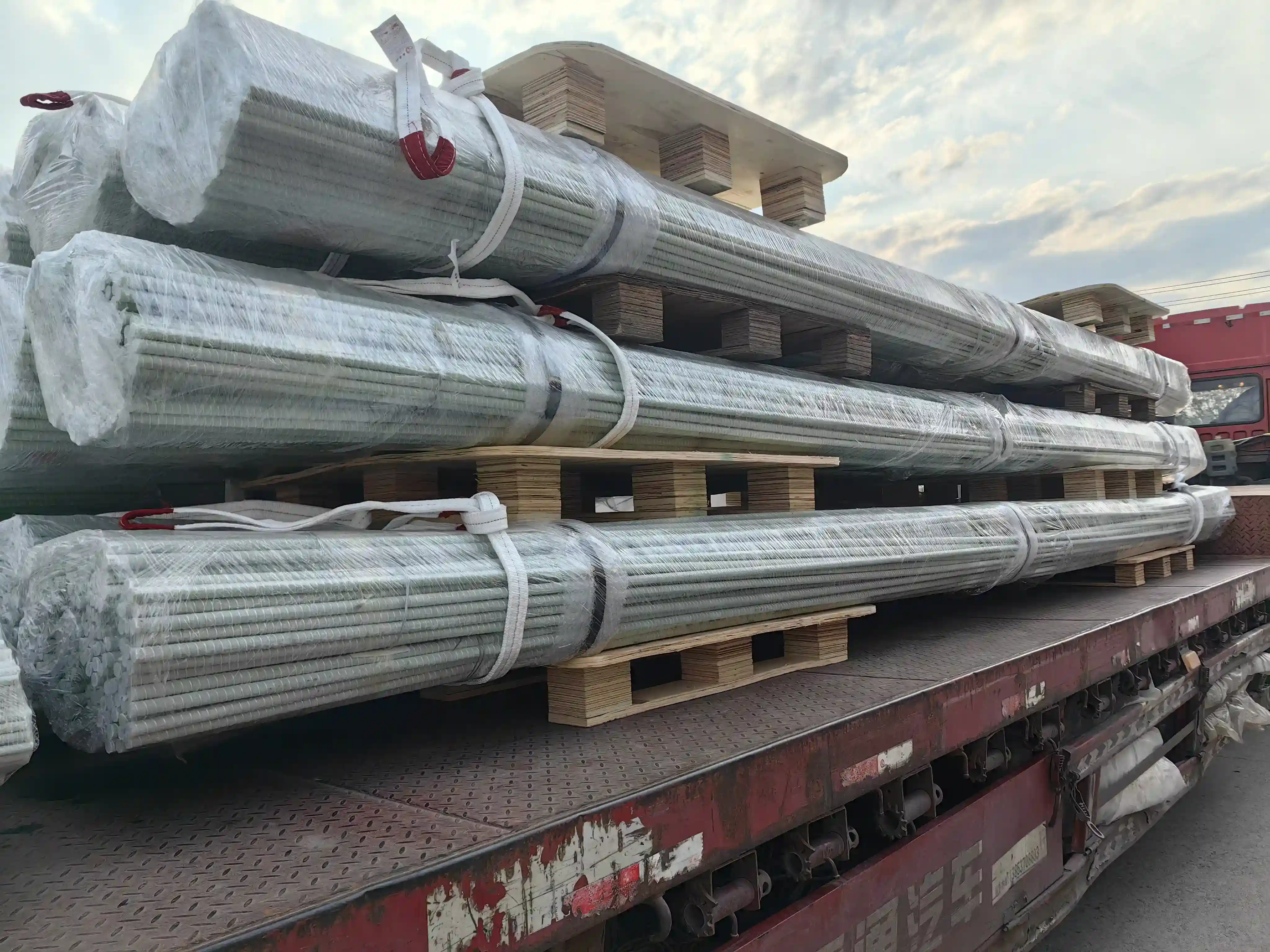
GFRP rebar is delivered in straight lengths or coiled form for easy transport to marine construction sites. The material should be stored on flat, level surfaces off the ground, covered with opaque sheeting to protect from direct UV exposure during storage. Unlike steel, GFRP can be cut on-site using standard abrasive chop saws or diamond-blade cutters. Torch cutting must never be used, as heat damages the fiber-resin matrix. For marine projects involving precast concrete piles or prefabricated deck panels, much of the GFRP cage assembly can be performed off-site in controlled fabrication yards before transport to the marine installation location.
Placement and Fixing
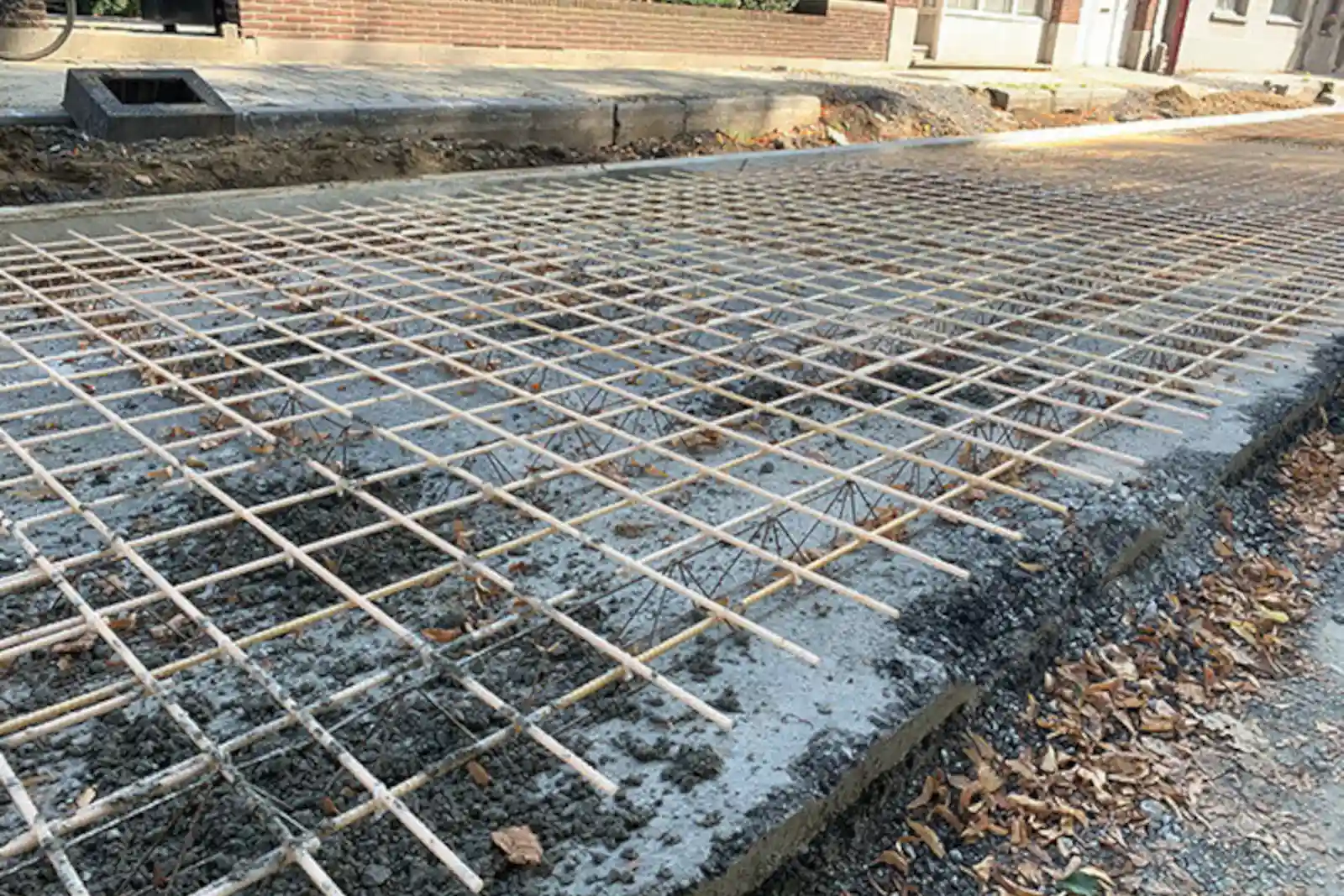
GFRP rebar is tied using plastic zip ties or stainless steel wire — never plain steel tie wire, which can introduce localized corrosion points. The lightweight nature of GFRP means that prefabricated rebar cages for marine piles and deck sections can be lifted and positioned with lighter craneage than equivalent steel cages. Plastic bar chairs and spacers should be used to maintain proper cover, as steel chairs would create corrosion pathways. The specified concrete cover for GFRP-reinforced marine elements per ACI 440.11 is typically 40-50 mm for seawater exposure, compared to 60-75 mm for steel.
Concrete Placement
Standard marine concrete mixes — typically high-performance concrete with low water-cement ratios (0.35-0.40), supplementary cementitious materials (slag, fly ash, silica fume), and corrosion-inhibiting admixtures — are fully compatible with GFRP reinforcement. Concrete should be placed and consolidated using internal vibration, taking care not to damage the GFRP bars with vibrator heads. The concrete slump should be maintained at 100-150 mm for proper flow around GFRP bars, which have a slightly larger diameter than equivalent-strength steel bars due to the lower modulus of GFRP.
Tidal Zone Construction Considerations
Marine construction in tidal zones requires specific planning for GFRP installation. Where possible, concrete placement should be timed to occur at low tide to minimize water flow through the formwork. Tremie concrete methods can be used for underwater placement with GFRP reinforcement. For splash zone elements, the combination of GFRP rebar and high-performance marine concrete creates a virtually impermeable reinforcement system that eliminates the corrosion risk that plagues steel-reinforced splash zone concrete.
Quality Control and Inspection
Inspection of GFRP reinforcement follows similar protocols to steel, with a few additions. Key checks include verifying bar diameter and spacing per shop drawings, ensuring adequate lap splice lengths (typically 40-60 bar diameters for GFRP per ACI 440.11), confirming proper cover using plastic spacers, and checking that all tie connections are secure. Unlike steel reinforcement, GFRP does not require electrical continuity testing for cathodic protection — a major quality control simplification for marine construction projects.
Lifespan of GFRP Rebar in Marine Construction
One of the most common questions from marine structure owners and designers concerns the longevity of GFRP reinforcement. Research and field data provide clear answers about the lifespan of GFRP rebar in marine construction.
Accelerated Aging Test Results
Accelerated aging studies conducted under the guidelines of ACI 440.9R and CSA S806 expose GFRP rebar to elevated temperatures (60°C), high alkalinity (pH 12-13), and saltwater solutions to simulate 50-100 years of marine service. These studies consistently demonstrate that GFRP rebar retains 80-95% of its initial tensile strength after the equivalent of 100 years of marine exposure. The primary degradation mechanism — slow hydrolysis of the glass fibers in alkaline environments — progresses at a rate that allows confident prediction of 100+ year service lives in marine concrete.
Field Validation from Existing Structures
Two decades of field monitoring of GFRP-reinforced marine structures provide real-world validation of laboratory predictions:
- Gabel pier, Norway (1995): One of the first marine structures built with GFRP rebar. Inspection after 25 years showed no corrosion, no loss of bond, and no reduction in structural capacity.
- Joffre Bridge deck, Canada (1997): While not a marine structure, this bridge deck exposed to deicing salts demonstrated the durability of GFRP in chloride environments — the same corrosion mechanism that attacks marine concrete.
- Various marine port facilities (2005-2020): Multiple port and harbor structures in the Middle East, Southeast Asia, and Europe show excellent GFRP performance after 10-15 years of continuous saltwater exposure.
Design Service Life Recommendations
Based on the accumulated research and field evidence, design codes and guidelines provide the following service life recommendations for GFRP-reinforced marine concrete structures:
| Marine Exposure Zone | Design Service Life with Steel | Design Service Life with GFRP |
|---|---|---|
| Atmospheric (above splash zone) | 30-50 years (with coatings) | 75-100+ years |
| Splash and tidal zones | 15-25 years (requires repairs) | 75-100+ years |
| Submerged (permanent seawater) | 25-40 years | 75-100+ years |
| Offshore platforms (splash zone) | 10-20 years before significant repair | 50-75+ years |
Factors That Can Reduce GFRP Lifespan
While GFRP rebar in saltwater environments offers exceptional durability, certain conditions can reduce service life if not addressed in design and construction: sustained temperatures above 65°C (149°F) in the concrete core, severely alkaline concrete pore solutions with pH above 13.5, UV exposure during storage before concrete placement, and mechanical damage during installation. Proper design per ACI 440.11 and good construction practices mitigate all of these risks, ensuring the full 75-100+ year design life of GFRP-reinforced marine concrete structures.
Conclusion
GFRP rebar marine construction represents a paradigm shift in how we design and build concrete infrastructure in saltwater environments. The corrosion immunity of GFRP reinforcement directly addresses the root cause of premature deterioration in marine concrete structures, offering engineers, owners, and contractors a proven solution for extending service life, reducing maintenance costs, and improving structural reliability.
From commercial ports and container terminals to offshore platforms and waterfront developments, GFRP rebar for marine structures delivers quantifiable advantages: 75-100+ year design life, elimination of cathodic protection systems, reduced concrete cover, lighter structural elements, and dramatically lower lifecycle costs. The material is supported by mature design codes (ACI 440.11, CSA S806, BS EN 17129), extensive laboratory testing, and growing field evidence from marine structures around the world.
As global maritime infrastructure investment continues to grow — driven by expanding trade, offshore energy development, and coastal urbanization — the adoption of GFRP rebar for marine concrete reinforcement will accelerate. Marine engineers, port authorities, and waterfront developers who specify GFRP rebar for saltwater environments are investing in infrastructure that will outlast conventional steel-reinforced structures by decades, with minimal maintenance intervention required over the full service life.
For technical guidance on specifying GFRP rebar for your marine construction project — including design assistance, product specifications, and project references — contact the GFRP Rebar Solutions engineering team. We provide comprehensive support for marine engineers and contractors worldwide.