Introduction
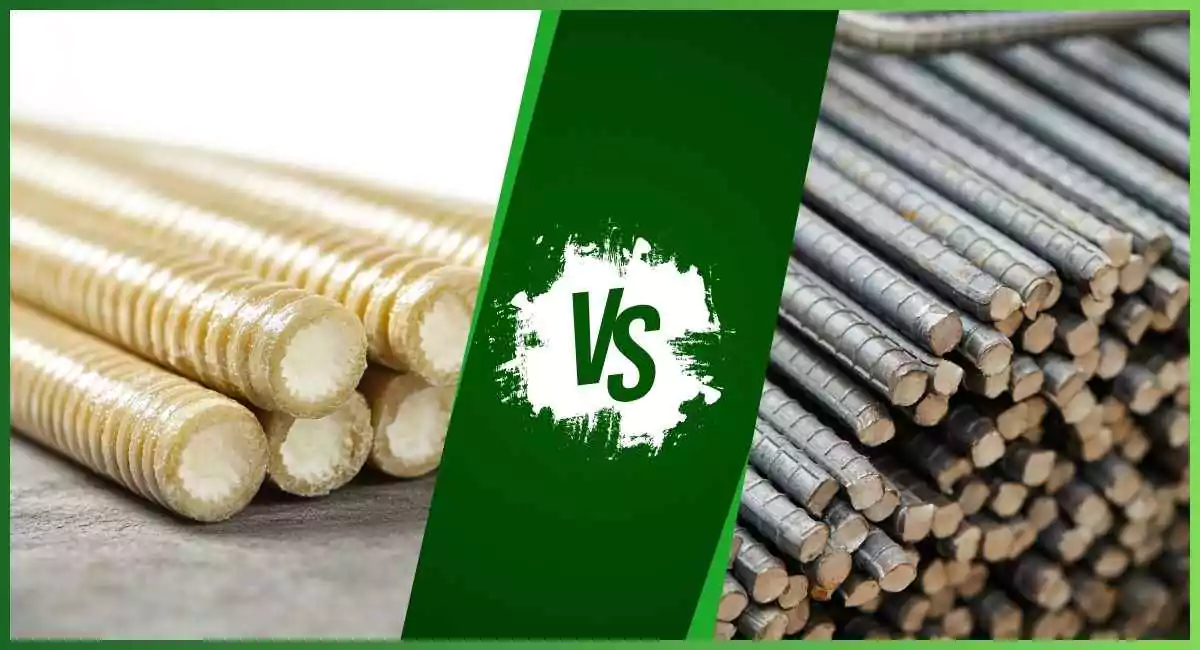
GFRP rebar (Glass Fiber Reinforced Polymer rebar) is revolutionizing the construction industry as a high-performance alternative to traditional steel reinforcement. Also known as fiberglass rebar or GFRP reinforcing bar, this advanced composite material offers exceptional tensile strength, superior corrosion resistance, and a remarkably lightweight profile that outperforms steel in demanding environments. As infrastructure projects worldwide face increasing challenges from corrosion, chemical exposure, and longevity requirements, GFRP rebar has emerged as the preferred solution for bridge decks, marine structures, seawalls, and concrete reinforcement in corrosive environments.
This comprehensive guide covers everything you need to know about GFRP rebar — from its composition and manufacturing process to its mechanical properties, applications across multiple industries, and a detailed comparison with steel reinforcement. Whether you are a structural engineer evaluating alternative reinforcement materials, a contractor seeking corrosion-resistant solutions for a coastal project, or a procurement professional researching where to buy GFRP rebar for infrastructure projects, this guide provides the technical data and practical insights you need to make informed decisions.
The global market for GFRP reinforcing bar is projected to grow from approximately $0.54 billion in 2025 to $0.95 billion by 2030, representing a compound annual growth rate of 12.1%. This rapid expansion is driven by increasing adoption of international standards such as ASTM D7957 and ACI 440.11, growing awareness of lifecycle cost benefits, and the undeniable performance advantages of glass fiber reinforced polymer rebar in challenging applications.
What Is GFRP Rebar?
GFRP rebar is a composite reinforcing bar made from high-strength E-glass fibers embedded in a thermoset polymer resin matrix, typically vinyl ester or epoxy. The glass fibers constitute 60–75% of the material by volume, providing the reinforcement with its exceptional tensile strength, while the resin matrix protects the fibers, transfers loads, and provides the bar with its structural shape.
Unlike traditional steel rebar, which is manufactured through hot-rolling of steel billets, GFRP reinforcing bar is produced through a continuous pultrusion process. In this process, thousands of continuous glass fiber rovings are drawn through a resin bath for impregnation, then pulled through a heated die where the resin cures and the bar takes its final shape. The bar is then cooled and cut to length. This manufacturing process allows for precise control over fiber orientation and volume fraction, resulting in consistent mechanical properties across production batches.
The surface of GFRP rebar is treated to enhance the mechanical bond with concrete. Common surface treatments include:
- Sand coating: A layer of silica sand is bonded to the surface, creating friction that improves load transfer between the bar and concrete.
- Ribbed or deformed surface: Helical wrapping or deformations are formed during pultrusion to create a mechanical interlock with concrete.
- Combined treatment: Many manufacturers combine ribbed patterns with sand coating for optimal bond performance.
Composition and Manufacturing Process
GFRP rebar is composed of two primary materials that work together to create a high-performance composite reinforcement:
Reinforcing fibers (60–75% by volume): Continuous E-glass fiber rovings provide the tensile strength and stiffness of the finished bar. The fibers are aligned longitudinally along the bar axis, giving GFRP rebar its characteristic anisotropic properties — exceptionally strong in tension along its length, with lower shear strength in the transverse direction. The fiber volume fraction is a critical quality parameter specified in ASTM D7957, directly influencing tensile capacity and modulus of elasticity.
Polymer resin matrix (25–40% by volume): The resin system, typically vinyl ester or epoxy, binds the fibers together, protects them from environmental degradation, and transfers stresses between the reinforcement and surrounding concrete. Vinyl ester resins are preferred for their excellent balance of mechanical properties, chemical resistance, and cost-effectiveness. Epoxy resins offer superior moisture resistance and are often specified for marine and seawater applications.
Manufacturing process — pultrusion: The continuous pultrusion process involves several stages:
- Fiber creeling — glass fiber rovings are unwound from creels under controlled tension
- Resin impregnation — fibers pass through a resin bath where they are thoroughly wetted
- Pre-forming — excess resin is removed and the fibers are shaped into the bar profile
- Curing — the impregnated fibers pass through a heated die where the resin cures at controlled temperatures
- Cooling and pulling — the cured bar is cooled and continuously pulled by caterpillar pullers
- Cutting — bars are cut to standard lengths (typically 6 m or 12 m) or custom lengths
Quality control throughout manufacturing ensures consistent fiber volume fraction, minimal void content (below 2%), proper cure degree, and accurate dimensional tolerances. Reputable manufacturers conduct tensile testing per ASTM D7205, bond strength testing per ASTM D7913, and alkaline resistance testing to verify long-term durability.
Available Sizes, Diameters, and Surface Types
GFRP rebar is manufactured in a wide range of standard diameters to accommodate different structural requirements. The most commonly available diameters and their approximate steel bar equivalents include:
| Diameter (mm) | US Bar Size | Cross-Sectional Area (mm²) | Typical Application |
|---|---|---|---|
| 6 mm | #2 | 28.3 | Light reinforcement, slabs |
| 8 mm | #3 | 50.3 | General purpose, walls |
| 10 mm | #3+ | 78.5 | Bridge decks, slabs (high demand) |
| 12 mm | #4 | 113.1 | Bridge decks, beams (highest demand) |
| 14 mm | #4+ | 153.9 | Heavy structural elements |
| 16 mm | #5 | 201.1 | Seawalls, marine structures |
| 20 mm | #6 | 314.2 | Heavy foundations, piles |
| 25 mm | #8 | 490.9 | Massive structural members |
| 32 mm | #10 | 804.2 | Special applications |
Surface finish options: GFRP rebar is available with several surface treatments designed to optimize the bond with concrete. Sand-coated bars feature a layer of angular silica sand particles bonded to the surface, creating high friction for excellent mechanical interlock. Ribbed bars have helical deformations wound onto the surface during pultrusion. Helical wrapped bars have a fiberglass strand wound around the exterior. Many premium products combine ribbed profiles with sand coating for maximum bond strength.
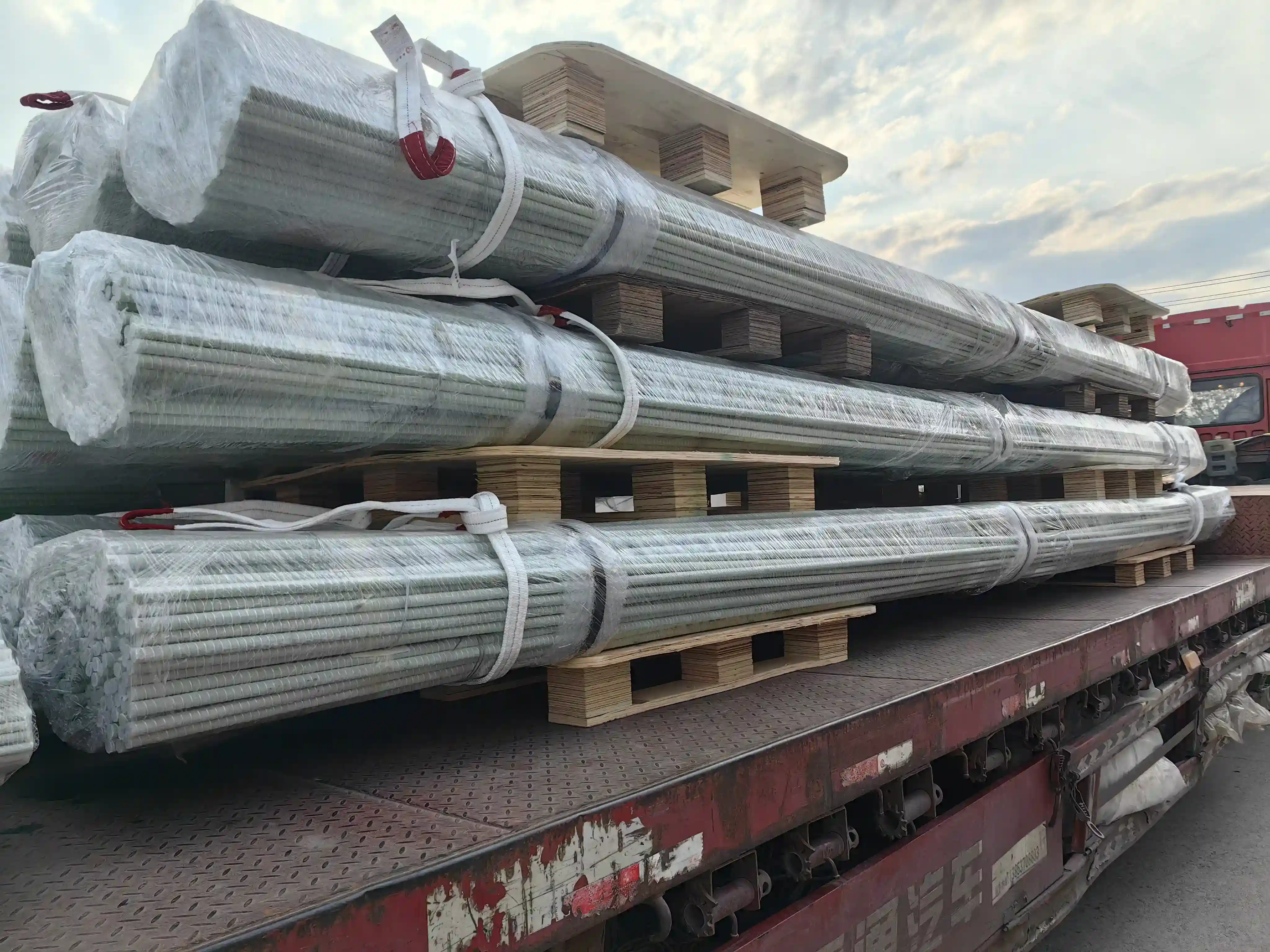
Standard lengths: GFRP rebar is typically supplied in 6-meter (20 ft) or 12-meter (40 ft) standard lengths, though custom lengths can be manufactured for specific project requirements. Unlike steel rebar, GFRP rebar cannot be bent or shaped on site — all bends and stirrups must be custom-manufactured to specification.
GFRP Rebar Properties and Specifications
The engineering properties of GFRP rebar differ fundamentally from steel reinforcement. Understanding these specifications is essential for proper design and application. Unlike steel, which has a well-defined yield point and elastic-plastic behavior, GFRP reinforcing bar exhibits linear-elastic behavior up to failure with no yielding — meaning it does not permanently deform before breaking. This characteristic has significant implications for structural design under ACI 440.11 guidelines. Fiberglass rebar, as it is sometimes called, provides a unique combination of high tensile strength and corrosion resistance that steel cannot match.
The following table summarizes the key mechanical and physical properties of standard GFRP rebar:
| Property | Typical Value | Test Standard |
|---|---|---|
| Guaranteed tensile strength | 690–1,030 MPa (100–150 ksi) | ASTM D7957 |
| Design tensile strength (CE = 0.8) | 552–690 MPa | ACI 440.1R |
| Modulus of elasticity | 40–60 GPa (5,800–8,700 ksi) | ASTM D7205 |
| Ultimate tensile strain | 1.5–2.5% | ACI 440.1R |
| Density | 1.9–2.2 g/cm³ | Manufacturer data |
| Fiber volume fraction | 60–75% | ASTM D7957 |
| Transverse shear strength | 150–170 MPa | ASTM D4475 |
| Bond strength to concrete | 8–25 MPa | ASTM D7913 |
| Longitudinal CTE | 5.4–9.0 × 10⁻⁶ /°C | ASTM D696 |
| Glass transition temperature (Tg) | 100–150 °C | DSC |
| Alkaline resistance (pH 12–13, 60°C) | ≥80% strength retention @ 90 days | ASTM D7957 |
A key design distinction: GFRP rebar has approximately 2–3 times the tensile strength of standard steel rebar (Grade 60 at 420 MPa) but only about one-quarter the modulus of elasticity (40–60 GPa vs 200 GPa for steel). This means that in most structural applications, serviceability criteria (deflection and crack control) govern the design rather than strength capacity — a critical consideration for structural engineers transitioning from steel design. Fiberglass rebar requires a different design mindset, focusing on serviceability rather than strength as the primary design constraint.
The guaranteed tensile strength is determined as the mean tensile strength of test specimens minus three standard deviations, as specified in ASTM D7957. The design tensile strength applies an additional environmental reduction factor (CE), typically 0.8 for concrete applications per ACI 440.1R, to account for long-term durability in alkaline environments.
Tensile Strength and Mechanical Performance
The tensile strength of GFRP rebar is directly related to the fiber content, fiber orientation, and quality of the resin matrix. Per ASTM D7957-22, the guaranteed tensile strength must be determined through testing in accordance with ASTM D7205, which specifies a standard test method for tensile properties of fiber-reinforced polymer bars.
Tensile behavior characteristics: Unlike steel, which exhibits a clear yield plateau and plastic deformation before failure, GFRP rebar displays linear-elastic stress-strain behavior up to catastrophic rupture. This means there is no warning deformation before failure — a critical consideration in structural design that requires higher safety margins in certain applications.
Factors affecting tensile performance:
- Fiber volume fraction: Higher glass fiber content directly increases tensile strength and modulus. ASTM D7957 requires a minimum of 60% fiber volume fraction for structural-grade GFRP rebar.
- Bar diameter: Larger diameter bars typically have slightly lower guaranteed tensile strength due to the shear lag effect — the inner fibers are less effectively loaded than outer fibers. For example, a 10 mm GFRP rebar may have a guaranteed tensile strength of 1,000 MPa, while a 32 mm bar may have 700 MPa.
- Temperature: GFRP rebar retains approximately 80% of its tensile strength at temperatures up to the glass transition temperature (Tg) of the resin system. Above Tg, the resin softens and load transfer between fibers is compromised.
- Moisture and alkaline exposure: Long-term exposure to the alkaline environment of concrete (pH 12–13) can degrade the glass fibers and resin interface. Quality GFRP rebar must demonstrate at least 80% tensile strength retention after 90 days of alkaline exposure per ASTM D7957.
Modulus of elasticity: The elastic modulus of GFRP rebar ranges from 40 to 60 GPa, approximately 20–30% of the steel modulus of 200 GPa. This lower stiffness means that GFRP-reinforced concrete members will experience greater deflections and wider crack widths under the same service loads compared to steel-reinforced members. Designers must account for this through appropriate member sizing and reinforcement ratios.
Physical Characteristics and Durability
Beyond tensile strength, several physical and durability properties distinguish GFRP rebar from conventional reinforcement materials.
Density and weight: At 1.9–2.2 g/cm³, GFRP rebar is approximately one-quarter the density of steel (7.85 g/cm³). This translates to a 75% weight reduction for equivalent volume, making glass fiber reinforced polymer rebar significantly easier to transport, handle, and install on site. A standard 12-meter length of 12 mm GFRP rebar weighs approximately 2.5 kg, compared to 8.9 kg for the same steel bar size. This weight advantage reduces transportation costs, simplifies crane and lifting requirements, and improves worker safety through reduced manual handling loads.
Corrosion resistance: GFRP rebar is inherently immune to electrochemical corrosion — a fundamental advantage over steel. The polymer resin matrix completely encapsulates the glass fibers, preventing moisture, chlorides, and chemicals from reaching the reinforcement. This eliminates the concrete spalling, cracking, and structural deterioration caused by steel rebar corrosion in chloride-rich environments such as marine structures, bridge decks treated with de-icing salts, and parking garages.
Thermal properties: The longitudinal coefficient of thermal expansion (CTE) of GFRP rebar (5.4–9.0 × 10⁻⁶ /°C) closely matches that of concrete (approximately 10 × 10⁻⁶ /°C), minimizing differential thermal stresses between the reinforcement and surrounding concrete. The transverse CTE is higher due to the resin-dominated properties in the radial direction, which must be considered in design.
Electrical and magnetic properties: GFRP rebar is electrically non-conductive and magnetically neutral, making it ideal for structures housing sensitive electronic equipment, MRI facilities, military installations, and research laboratories where electromagnetic interference must be eliminated.
Durability in harsh environments: GFRP reinforcing bar demonstrates excellent resistance to a wide range of aggressive chemicals including chlorides, sulfates, acids, and alkalis. It does not rust, corrode, or deteriorate when exposed to seawater, de-icing salts, wastewater, or industrial chemicals. This durability is validated through accelerated aging tests specified in ASTM D7957, including alkaline resistance testing at elevated temperatures.
Standards and Certifications (ASTM D7957, ACI 440.11)
Compliance with recognized international standards is essential for GFRP rebar to be specified in structural applications. The three most important standards governing GFRP rebar are:
ASTM D7957-22 — Standard Specification for Solid Round Glass Fiber Reinforced Polymer Bars for Concrete Reinforcement: This is the primary material specification for GFRP rebar in North America. It defines requirements for raw materials, manufacturing, dimensional tolerances, mechanical properties, and testing protocols. Key requirements include minimum fiber volume fraction of 60%, guaranteed tensile strength determination, alkaline resistance testing, and glass transition temperature requirements. ASTM D7957-compliant bars carry the assurance of consistent quality and performance.
ACI 440.11-22 — Building Code Requirements for Structural Concrete Reinforced with Glass Fiber-Reinforced Polymer (GFRP) Bars: This is the design code for GFRP-reinforced concrete structures, adopted by the International Building Code (IBC). It provides design provisions for flexure, shear, development and splice lengths, serviceability, and environmental durability. ACI 440.11-22 represents a major milestone in GFRP rebar adoption, providing engineers with a codified design framework equivalent to ACI 318 for steel reinforcement.
ICC-ES AC454 — Acceptance Criteria for Glass Fiber-Reinforced Polymer (GFRP) Bars for Concrete Reinforcement: This evaluation criteria is used by ICC-ES for issuing code compliance reports for GFRP rebar products. Manufacturers with ICC-ES AC454 reports can have their products specified in jurisdictions following the International Building Code.
Other relevant standards:
- ASTM D7205: Standard test method for tensile properties of FRP bars
- ASTM D7913: Standard test method for bond strength of FRP bars to concrete
- ASTM D4475: Standard test method for transverse shear strength of FRP bars
- CSA S806: Canadian standard for design and construction of FRP-reinforced structures
- EN 17129: European standard for FRP bars — a new unified standard facilitating CE marking for the EU market
When specifying or purchasing GFRP rebar, always verify that the product carries third-party certification to the relevant standards for your jurisdiction. This ensures the material meets the minimum performance requirements for safe structural application.
Applications of GFRP Rebar in Construction
GFRP rebar is used in a wide range of construction applications where its unique properties — corrosion resistance, high tensile strength, light weight, and electromagnetic neutrality — provide significant advantages over traditional steel reinforcement. The primary applications of glass fiber reinforced polymer rebar span infrastructure, marine, industrial, and specialized construction sectors.
In bridge deck construction, GFRP rebar eliminates the primary cause of premature deterioration: corrosion of steel reinforcement caused by de-icing salts and environmental moisture. Highway departments across North America, Europe, and the Middle East have increasingly specified GFRP reinforcing bar for new bridge decks and deck overlays, with thousands of structures completed since the early 2000s demonstrating excellent long-term performance.
Marine and coastal structures benefit tremendously from GFRP rebar's immunity to chloride-induced corrosion. Seawalls, bulkheads, piers, docks, and floating structures exposed to seawater and salt spray have a service life limited primarily by steel reinforcement corrosion when using conventional rebar. GFRP rebar extends the service life of these structures from 20–30 years to 75–100 years, dramatically reducing lifecycle costs.
In concrete reinforcement applications where chemical exposure is a concern — wastewater treatment plants, chemical processing facilities, industrial floors, and parking garages — GFRP rebar provides durable, maintenance-free reinforcement that eliminates the concrete spalling and structural damage associated with corroding steel.
Specialized applications include electromagnetic-sensitive facilities such as MRI rooms in hospitals, military communication centers, research laboratories, and airport runways where steel reinforcement would interfere with sensitive equipment or magnetic field requirements.
Bridge Decks and Highway Infrastructure
Bridge decks and highway infrastructure represent one of the largest and fastest-growing markets for GFRP rebar. The decision to use GFRP rebar in bridge deck construction is driven by the devastating economic impact of steel reinforcement corrosion in these structures.
Why bridge decks need corrosion-resistant reinforcement: Bridge decks are continuously exposed to de-icing salts, moisture, and freeze-thaw cycles. Chloride ions penetrate the concrete cover and reach the steel reinforcement, initiating corrosion that expands and cracks the concrete. This deterioration leads to costly repairs, lane closures, and reduced service life. According to the American Society of Civil Engineers, corrosion-related bridge deck deterioration costs billions annually in the United States alone.
GFRP rebar in bridge deck applications: GFRP rebar is used as primary reinforcement in top and bottom mats of bridge deck slabs, barrier walls, and approach slabs. The design follows ACI 440.11 provisions, which account for the lower modulus of elasticity and linear-elastic behavior of GFRP rebar. Typical bridge deck specifications call for 12 mm to 16 mm diameter GFRP rebar at standard spacing, with sand-coated surface finish for optimal bond.
Notable bridge projects using GFRP rebar:
- Ohio's Market Street Bridge: First all-GFRP-reinforced bridge deck in the United States (2006), still performing excellently after nearly two decades of service.
- Canada's Joffre Bridge (Quebec): One of the first major bridges to use GFRP rebar as primary reinforcement in the deck slab.
- UAE's Sheikh Khalifa Bridge: GFRP rebar specified for corrosion resistance in the extreme marine environment of the Arabian Gulf.
- Numerous highway bridge decks in Ontario, New York, Ohio, Virginia, and Oregon: These jurisdictions have developed standard specifications for GFRP rebar in bridge construction based on documented long-term performance.
For highway infrastructure, GFRP rebar is also used in barrier walls, median barriers, retaining walls, and sound barriers where corrosion resistance reduces maintenance requirements and improves public safety.
Marine and Seawall Structures
Marine and coastal construction is one of the most demanding environments for concrete reinforcement. Structures such as seawalls, breakwaters, piers, jetties, dock slabs, and floating breakwaters are exposed to continuous saltwater attack, wave action, and tidal cycling — conditions that rapidly corrode conventional steel reinforcement.
Seawall construction with GFRP rebar: Seawalls protect coastal infrastructure from wave erosion and storm surge. Traditional steel-reinforced seawalls typically show signs of corrosion-induced deterioration within 10–15 years in aggressive marine environments. GFRP rebar for seawall construction eliminates this failure mechanism entirely, providing corrosion-free reinforcement that maintains structural integrity for the design life of the structure — often 50 to 100 years.
Key advantages in marine environments:
- Zero corrosion: GFRP rebar is completely immune to chloride-induced corrosion, the primary failure mechanism in marine concrete structures.
- Chemical resistance: Glass fiber reinforced polymer rebar resists attack from seawater chemicals, sulfates, and microorganisms, unlike steel which requires cathodic protection systems or epoxy coatings that degrade over time.
- Lightweight installation: At one-quarter the weight of steel, GFRP rebar reduces the need for heavy lifting equipment in challenging marine construction sites, improving safety and reducing installation costs.
- Reduced concrete cover: Since corrosion is not a concern, required concrete cover over GFRP rebar can be reduced compared to steel, allowing thinner structural elements and reduced dead loads.
Application examples in marine construction: GFRP rebar has been successfully used in seawalls along the Florida coastline, pier decks in California harbors, concrete floating docks in the Great Lakes, and coastal protection structures in the Gulf region of the Middle East. The Arabian Gulf and Red Sea coastal developments in the UAE, Saudi Arabia, and Qatar represent a rapidly growing market where GFRP rebar is specified for its proven corrosion resistance in extreme marine environments with high salinity and elevated temperatures.
Design considerations for marine GFRP rebar: When designing GFRP-reinforced marine structures, engineers must account for environmental reduction factors specified in ACI 440.11. These factors reduce the design tensile strength based on exposure conditions — marine environments typically warrant the highest reduction factor (CE = 0.8 for concrete not exposed to direct sunlight, lower for exposed applications).
Concrete Reinforcement in Corrosive Environments
Beyond bridge decks and marine structures, GFRP rebar serves as a superior concrete reinforcement solution in any environment where corrosion, chemical attack, or electromagnetic interference is a concern.
Wastewater treatment plants: These facilities expose concrete to hydrogen sulfide gas, chlorides, and other aggressive chemicals that rapidly corrode steel reinforcement. GFRP rebar provides maintenance-free reinforcement for tanks, channels, aeration basins, and clarifiers, eliminating the need for costly coatings or cathodic protection systems.
Parking garages: Parking structures are notorious for steel rebar corrosion caused by de-icing salts carried on vehicles from winter roads. GFRP rebar in parking garage slabs, ramps, and walls eliminates corrosion-related spalling and extends service life significantly. Many parking garages in northern US states and Canada now specify GFRP rebar for top mat reinforcement in exposed slabs.
Chemical processing facilities: Industrial floors, containment structures, and foundations in chemical plants are exposed to aggressive chemicals that attack steel reinforcement. GFRP rebar's chemical resistance makes it ideal for these applications, reducing maintenance downtime and extending structural life.
Tunnel linings and underground structures: Underground environments provide constant moisture and often contain corrosive groundwater. GFRP rebar in tunnel segments, cut-and-cover structures, and below-grade walls provides durable reinforcement that will not corrode over the structure's design life.
Electromagnetic-sensitive facilities: GFRP rebar is electrically non-conductive and magnetically neutral, making it the preferred reinforcement for MRI suites in hospitals, military radar installations, airport control towers, telecommunications facilities, and research laboratories where steel's magnetic properties would cause interference.
Concrete pavement and slabs-on-grade: GFRP rebar is used in industrial floor slabs, airport aprons, and concrete pavements where joint deterioration from steel corrosion is a recurring maintenance issue. The corrosion-free nature of glass fiber reinforced polymer rebar eliminates spalling at joints and cracks.
For any of these applications, the selection of GFRP rebar must be made during the design phase, with appropriate consideration of the material's unique mechanical properties and design provisions of ACI 440.11 or applicable local codes.
Key Benefits of GFRP Rebar
Why choose GFRP rebar over traditional steel reinforcement? The answer lies in a combination of performance advantages that translate directly to longer structural life, reduced maintenance costs, and improved construction efficiency. While the initial material cost of GFRP rebar is higher than steel, the total lifecycle benefits often result in lower overall project costs.
The five key benefits that drive the adoption of glass fiber reinforced polymer rebar across the construction industry are corrosion resistance, weight savings, high tensile strength, electromagnetic neutrality, and long-term durability. Each of these advantages addresses specific limitations of steel reinforcement that have historically constrained the service life and performance of concrete structures.
Superior Corrosion Resistance
The single most compelling advantage of GFRP rebar is its complete immunity to electrochemical corrosion. Steel rebar corrodes when chloride ions penetrate concrete and reach the reinforcement surface, initiating an electrochemical reaction that produces expansive rust. This rust occupies up to six times the volume of the original steel, generating tensile stresses that crack and spall the concrete cover.
GFRP rebar eliminates this failure mechanism entirely. The polymer resin matrix fully encapsulates the glass fibers, creating a barrier that prevents moisture, chlorides, and oxygen from reaching the reinforcement. Independent laboratory testing and field studies spanning more than 20 years confirm that GFRP rebar maintains its structural integrity in environments that would severely degrade steel reinforcement.
Quantified corrosion resistance: Accelerated aging tests per ASTM D7957 require at least 80% tensile strength retention after 90 days of exposure to alkaline solution (pH 12-13) at 60°C. Premium GFRP rebar products regularly exceed 90% retention under these conditions, demonstrating exceptional long-term durability in concrete environments.
Real-world impact: Structures reinforced with GFRP rebar in marine environments show no signs of corrosion-related deterioration after 15-20 years of service, while comparable steel-reinforced structures typically require major rehabilitation within 10-15 years. This corrosion resistance effectively eliminates the primary driver of premature concrete structure failure worldwide.
Lightweight and High Strength-to-Weight Ratio
At 1.9-2.2 g/cm³, GFRP rebar weighs approximately one-quarter of steel reinforcement (7.85 g/cm³). This dramatic weight difference — a 75% reduction — has significant practical implications throughout the construction process.
Transportation savings: A truckload of GFRP rebar can carry four times the reinforcing capacity of a steel load, reducing shipping costs and the number of deliveries required for a project. For remote construction sites or projects with restricted access, this logistical advantage is substantial.
On-site handling: Workers can carry multiple lengths of GFRP rebar simultaneously without mechanical assistance. A 12-meter length of 12 mm GFRP rebar weighs approximately 2.5 kg, compared to 8.9 kg for steel. This reduces worker fatigue, improves safety, and eliminates the need for heavy lifting equipment in many installation scenarios.
High strength-to-weight ratio: Despite its light weight, GFRP rebar delivers tensile strengths of 690-1,030 MPa — two to three times the yield strength of Grade 60 steel rebar (420 MPa). This exceptional strength-to-weight ratio makes GFRP rebar particularly advantageous in applications where weight reduction is critical, such as precast concrete elements, floating structures, and seismic retrofit projects.
Foundation and structural savings: The reduced dead load from lighter reinforcement can translate to smaller foundations and supporting members, potentially offsetting the higher material cost of GFRP rebar through overall structural savings.
Electromagnetic Transparency
GFRP rebar is electrically non-conductive and magnetically neutral — properties that are impossible to achieve with steel reinforcement. This electromagnetic transparency opens up applications where steel's magnetic and conductive properties are problematic.
Medical facilities: MRI (Magnetic Resonance Imaging) suites require reinforcement that does not interfere with the powerful magnetic fields used for imaging. GFRP rebar is the standard specification for MRI room construction, eliminating magnetic field distortion and safety hazards associated with steel reinforcement.
Military and defense: Military installations, radar facilities, and communication centers require non-magnetic construction materials to avoid interference with sensitive electronic equipment and to reduce magnetic signatures. GFRP rebar meets these requirements while providing full structural capacity.
Research and technology: Laboratories with sensitive scientific instruments, particle accelerators, and nuclear magnetic resonance equipment benefit from GFRP rebar's non-conductive and non-magnetic properties. The material does not create eddy currents, magnetic field interference, or electrical grounding paths that could compromise sensitive measurements.
Transportation infrastructure: Airport runways, rail systems, and toll roads with electronic toll collection benefit from GFRP rebar because it does not interfere with electromagnetic detection systems, ground-penetrating radar, or wireless communication networks embedded in or near the structure.
GFRP Rebar vs Steel Rebar: A Detailed Comparison
Understanding the differences between GFRP rebar and steel rebar is essential for engineers and specifiers evaluating alternative reinforcement materials. The two materials have fundamentally different mechanical properties, durability characteristics, and economic profiles that influence their suitability for specific applications.
| Property | GFRP Rebar | Steel Rebar (Grade 60) |
|---|---|---|
| Tensile/Yield strength | 690-1,030 MPa (guaranteed tensile) | 420 MPa (yield) |
| Modulus of elasticity | 40-60 GPa | 200 GPa |
| Behavior at failure | Linear-elastic, no yielding | Elastic-plastic with yield plateau |
| Density | 1.9-2.2 g/cm³ | 7.85 g/cm³ |
| Corrosion resistance | Excellent (immune to chlorides) | Poor (corrodes in chloride environments) |
| Electrical conductivity | Non-conductive | Conductive |
| Magnetic properties | Non-magnetic | Magnetic |
| Thermal conductivity | Low (0.3-0.5 W/m·K) | High (50 W/m·K) |
| CTE (longitudinal) | 5.4-9.0 × 10⁻⁶/°C | 11.7 × 10⁻⁶/°C |
| Field bendability | Cannot be bent on site | Can be bent and shaped |
| Fire resistance | Strength loss above Tg (100-150°C) | Maintains strength up to 500°C+ |
| Design life in aggressive environments | 75-100+ years | 20-40 years (with adequate cover) |
The most significant structural difference is the elastic modulus — GFRP's lower modulus means that deflection rather than strength typically governs the design. Most GFRP-reinforced members are larger than their steel-reinforced equivalents to meet serviceability requirements. However, the trade-off is a structure that will not corrode and requires minimal maintenance over its service life.
Cost Comparison: GFRP vs Steel Rebar
How much does GFRP rebar cost compared to steel rebar? This is one of the most frequently asked questions by engineers and project owners evaluating alternative reinforcement. The answer requires a nuanced understanding of both initial material costs and total lifecycle economics.
Initial material cost: On a per-kilogram basis, GFRP rebar costs significantly more than steel — typically 3 to 8 times the unit price of standard steel rebar. However, this comparison is misleading because GFRP rebar has different mechanical properties that affect the total quantity required. When comparing on a strength-for-strength basis, the cost gap narrows considerably.
Material cost comparison examples: A standard 12 mm GFRP rebar (Grade 60 equivalent) costs approximately $0.35-0.65 USD per linear meter FOB, while a 12 mm steel rebar costs approximately $0.15-0.25 USD per linear meter. However, because GFRP rebar has higher tensile strength, the required reinforcement area for strength-controlled applications may be lower — partially offsetting the unit cost difference.
Installation cost factors: GFRP rebar's lighter weight reduces installation labor costs and equipment requirements. Studies comparing GFRP and steel rebar installation in bridge decks have found that GFRP rebar installation is 10-25% faster, primarily due to reduced lifting requirements and easier handling. Additionally, GFRP rebar can be cut on site with standard abrasive saws, and it does not require welding or tying of electrical continuity for cathodic protection.
Transportation savings: At one-quarter the weight of steel, GFRP rebar transportation costs are significantly lower. A standard flatbed truck can carry the reinforcing capacity equivalent of four steel loads, reducing shipping expenses and carbon footprint.
Installation Differences
The installation of GFRP rebar differs from steel rebar in several important ways that contractors and site supervisors must understand before beginning a project.
Cutting: GFRP rebar cannot be cut with standard rebar shears or torches. Instead, it must be cut using abrasive masonry saws, diamond-blade cut-off saws, or high-speed angle grinders with abrasive cutting wheels. Cutting generates fine glass dust, so appropriate respiratory protection is required. The material cuts cleanly and does not produce sparks.
Tying: GFRP rebar is tied using standard rebar tying tools and tie wire. However, because GFRP rebar is more flexible than steel, additional support chairs or closer spacing of supports may be needed to maintain proper position during concrete placement. The bars are lighter and easier to maneuver into position.
Bending: Unlike steel rebar, GFRP rebar cannot be bent or shaped on site. All curved bars, stirrups, hooks, and bends must be custom-manufactured to the project specifications. This is because bending GFRP rebar damages the fibers on the tension side, significantly reducing its load-carrying capacity. Project planning must account for this by ordering all bent shapes from the manufacturer.
Concrete placement: Concrete placement around GFRP rebar follows the same procedures as steel-reinforced concrete. However, because GFRP rebar is more flexible, workers must exercise caution to avoid displacing the reinforcement during concrete placement. Vibrator operators should take care not to directly contact the bars, as this could damage the surface coating.
Worker safety: GFRP rebar does not conduct electricity, eliminating electrocution hazards on site. It is also lighter, reducing ergonomic strain and injury risks from manual handling. The primary safety consideration is dust management during cutting operations.
Lifecycle Cost and Performance Analysis
When evaluating GFRP rebar versus steel rebar for infrastructure projects, a lifecycle cost analysis (LCCA) provides the most accurate basis for comparison. While steel has a lower initial material cost, the long-term maintenance and repair costs associated with corrosion can make GFRP rebar the more economical choice over the design life of a structure.
Typical lifecycle cost comparison for a bridge deck (100-year design life):
- Steel reinforcement option: Lower initial cost but requires major rehabilitation at year 20-30 (deck overlay or partial replacement) and again at year 50-60. Total 100-year cost: 2.5 to 4 times the initial construction cost when maintenance, traffic disruption, and user delay costs are included.
- GFRP rebar option: Higher initial material cost (approximately 15-30% more than steel-reinforced deck) but no corrosion-related maintenance required over the 100-year service life. Total 100-year cost: approximately 1.0 to 1.3 times the initial construction cost.
Quantified savings from real projects: The Ontario Ministry of Transportation performed lifecycle cost analyses on bridge decks using GFRP rebar versus conventional steel. The results consistently showed lifecycle cost savings of 20-40% over a 50-year analysis period when maintenance, traffic management, and user delay costs were factored in. For marine structures, where corrosion is more aggressive, lifecycle savings are even more pronounced — often exceeding 50%.
Factors favoring GFRP rebar in lifecycle analysis:
- No corrosion-related inspection and maintenance costs
- Elimination of cathodic protection system installation and monitoring
- Reduced traffic disruption from repair work (especially critical for high-traffic infrastructure)
- Elimination of environmental costs from corrosion repair materials and waste
- Extended structure service life reducing the need for complete replacement
How to Install GFRP Rebar in Concrete Structures
How to install GFRP rebar in concrete structures requires following specific procedures that account for the material's unique characteristics. Proper installation is critical to achieving the design performance and longevity that GFRP rebar offers.
Pre-installation planning: Before installation begins, review the project drawings and specifications carefully. Verify that all GFRP rebar sizes, lengths, and shapes have been ordered, as no field bending is possible. Ensure all cutting equipment (abrasive saws with appropriate blades) and personal protective equipment (dust masks, gloves, eye protection) are available on site.
Step-by-step installation process:
- Inspect materials: Check all delivered GFRP rebar for damage during transport. Look for delamination, surface damage, or excessive curvature. Reject any bars with defects that could affect structural performance.
- Cut bars to length: Using abrasive cut-off saws or diamond blades, cut bars to the specified lengths. Support the bar close to the cut line to prevent vibration and fraying of the glass fibers.
- Position bottom reinforcement: Place bottom mat bars on precast concrete supports or chairs at the specified spacing. Use plastic or stainless steel supports — avoid bare metal chairs that could create corrosion points.
- Install stirrups and shear reinforcement: Prefabricated GFRP stirrups are placed and tied into position. Remember that stirrups must be manufactured to the required shape, not bent on site.
- Position top reinforcement: Install top mat bars using appropriate supports to maintain the specified concrete cover. GFRP rebar is lighter and more flexible than steel — use additional supports as needed to prevent sagging.
- Tie and secure: Use standard tie wire to secure intersections. Avoid overtightening, which could damage the surface coating. The bar spacing should be maintained within the tolerances specified in the project drawings.
- Place concrete: Concrete placement procedures are similar to steel-reinforced concrete. Use care during vibration to avoid direct contact with the GFRP bars, and ensure the concrete completely encapsulates all reinforcement without voids.
Key quality control checks: Verify bar spacing, concrete cover depth, and the position of all bent bars before concrete placement. Ensure proper curing of the concrete per project specifications. Document all installation activities for quality assurance records.
How to Select the Right GFRP Rebar Size and Diameter
How to select the right GFRP rebar size and diameter for a project is a critical engineering decision that affects structural performance, constructability, and project economics. The selection process follows a systematic approach based on structural requirements, applicable design codes, and practical construction considerations.
Step 1: Determine structural requirements: Calculate the required reinforcement area based on the factored design loads, following ACI 440.11 or applicable local code provisions. Unlike steel design, where the yield strength governs, GFRP rebar design is based on the guaranteed tensile strength with appropriate environmental and safety reduction factors applied. The design tensile strength is calculated as:
f_fu = f_fu* × CE × safety factor
Where f_fu* is the guaranteed tensile strength, CE is the environmental reduction factor (typically 0.8 for concrete), and the safety factor follows code provisions.
Step 2: Check serviceability: Because GFRP rebar has a lower modulus of elasticity than steel, serviceability (deflection and crack control) often governs the design. Calculate expected deflections and crack widths under service loads and verify they are within acceptable limits. If serviceability criteria are not met, either increase the reinforcement area or increase the member depth.
Step 3: Select bar diameter and spacing: Based on the required area of reinforcement, select a combination of bar diameter and spacing that meets both strength and serviceability requirements. Common diameters for most structural applications are 10 mm, 12 mm, and 16 mm. The global GFRP rebar market sees approximately 60% of demand concentrated in these three sizes.
Step 4: Verify development length: GFRP rebar requires longer development and splice lengths than steel due to the different bond mechanism. Calculate required development length per ACI 440.11 provisions and verify that the available anchorage length is sufficient.
Step 5: Consider constructability: Ensure the selected bar size and spacing can be properly installed. Consider that GFRP rebar is more flexible than steel — closer support spacing may be needed. Verify that all required bent shapes can be manufactured — remember that GFRP rebar cannot be bent on site.
Selection guide by application:
- Bridge decks (top and bottom mats): 12 mm to 16 mm diameter, sand-coated surface
- Seawalls and marine structures: 12 mm to 20 mm diameter, sand-coated or ribbed surface
- Building slabs and foundations: 10 mm to 16 mm diameter, sand-coated surface
- Precast concrete elements: 8 mm to 20 mm diameter, depending on element size
- Parking garage slabs: 10 mm to 16 mm diameter, typically only top mat in corrosive exposure
Frequently Asked Questions About GFRP Rebar
What is GFRP rebar used for in construction?
GFRP rebar is used as corrosion-resistant concrete reinforcement in structures exposed to chlorides, moisture, and aggressive chemicals. Primary applications include bridge decks, seawalls, marine structures, parking garages, wastewater treatment plants, chemical processing facilities, and electromagnetic-sensitive facilities such as MRI rooms and military installations. It is also increasingly used in general concrete reinforcement where extended service life and reduced maintenance are desired.
How much does GFRP rebar cost compared to steel rebar?
The initial material cost of GFRP rebar is typically 3 to 8 times higher than steel on a per-kilogram basis. However, when evaluated on a strength-for-strength basis and considering the total lifecycle cost — including installation, maintenance, repairs, and traffic disruption — GFRP rebar often proves to be the more economical choice. Lifecycle cost analyses consistently show 20-40% savings over a 50-100 year design life for infrastructure projects in corrosive environments.
How to install GFRP rebar in concrete structures?
GFRP rebar is installed similarly to steel rebar, with key differences: it must be cut with abrasive saws (not shears or torches), cannot be bent on site (all bends must be factory-manufactured), and requires closer support spacing due to its flexibility. Standard tie wire is used for securing bars. Concrete placement follows standard procedures with care taken during vibration to avoid direct bar contact. See the full installation section above for detailed step-by-step guidance.
Where to buy GFRP rebar for infrastructure projects?
GFRP rebar is available from manufacturers and specialized suppliers worldwide. When purchasing for infrastructure projects, verify that the product has the required third-party certifications — ASTM D7957 compliance for North America, CE marking for the EU market, or applicable local standards. Key sourcing regions include China (the largest manufacturing base), North America, Europe, and the Middle East. For large infrastructure projects, it is advisable to work directly with established manufacturers who can provide the required quality documentation, testing reports, and project support.
Why choose GFRP rebar over traditional steel reinforcement?
The primary reason to choose GFRP rebar is its complete immunity to electrochemical corrosion, which eliminates the most common cause of premature concrete structure deterioration. Additional benefits include 75% weight reduction compared to steel, two to three times higher tensile strength, electromagnetic neutrality, and significantly reduced lifecycle maintenance costs. For structures in corrosive environments, GFRP rebar extends service life from 20-30 years to 75-100 years.
What are the tensile strength specifications of GFRP rebar?
Standard GFRP rebar has a guaranteed tensile strength of 690-1,030 MPa (100-150 ksi) per ASTM D7957, which is two to three times the yield strength of Grade 60 steel rebar (420 MPa). The design tensile strength after applying environmental reduction factors (CE = 0.8) is 552-690 MPa. The modulus of elasticity is 40-60 GPa — approximately 20-30% of steel's 200 GPa. The ultimate tensile strain at rupture is 1.5-2.5%.
How to select the right GFRP rebar size and diameter for a project?
Selection follows a systematic process: calculate the required reinforcement area per ACI 440.11 design provisions, check serviceability (deflection and crack control), select bar diameter and spacing, verify development length, and confirm constructability. The most commonly used diameters are 10 mm, 12 mm, and 16 mm, which together account for approximately 60% of global demand. See the full selection guide section above for detailed application-specific recommendations.
Conclusion
GFRP rebar represents a transformative advancement in concrete reinforcement technology. As infrastructure owners worldwide face the growing challenge of corrosion-induced deterioration, glass fiber reinforced polymer rebar offers a proven, code-approved solution that extends structural service life from decades to a century or more.
This comprehensive guide has covered the essential aspects of GFRP reinforcing bar — from its composition as a composite of E-glass fibers and polymer resin, through its mechanical properties that differ fundamentally from steel, to its diverse applications in bridge decks, marine structures, chemical facilities, and electromagnetic-sensitive environments. The comparison with steel reinforcement reveals that while the initial material cost is higher, the lifecycle economic benefits — particularly in corrosive environments — make GFRP rebar the superior choice for long-term infrastructure investment.
Key takeaways:
- GFRP rebar offers 2-3 times the tensile strength of steel with one-quarter the weight, making it a high-performance reinforcement material
- Its complete immunity to chloride-induced corrosion eliminates the primary cause of premature concrete structure failure
- Design must follow ACI 440.11 provisions, which differ significantly from steel design codes
- Proper installation procedures — particularly regarding cutting, the prohibition of field bending, and support spacing — are essential for achieving design performance
- Lifecycle cost analyses consistently demonstrate that GFRP rebar is economically advantageous for structures in corrosive environments
- International standards (ASTM D7957, ACI 440.11, ICC-ES AC454, EN 17129) provide a robust framework for specifying and using GFRP rebar worldwide
As the global construction industry continues to adopt sustainable, long-life infrastructure solutions, GFRP rebar will play an increasingly central role in concrete reinforcement. Engineers, contractors, and project owners who understand the material's properties, design requirements, and installation practices will be well-positioned to harness its benefits for their projects.
Ready to specify GFRP rebar for your next project? Contact us to discuss your reinforcement requirements, request technical specifications, or obtain a project-specific quote. Our team of GFRP rebar specialists can provide design assistance, material recommendations, and procurement support for projects of any scale.