Introduction to ASTM D7957 GFRP Rebar Certification
When specifying glass fiber reinforced polymer (GFRP) reinforcement for infrastructure projects, understanding the certification landscape is critical. The ASTM D7957 GFRP rebar standard is the benchmark specification for solid round glass fiber reinforced polymer bars used in concrete construction across the United States and increasingly worldwide. This comprehensive guide covers everything you need to know about ASTM D7957 certification — from tensile strength requirements and compliant sizes to compliance verification and documentation for project bids.
Whether you are a structural engineer specifying reinforcement, a contractor sourcing materials, or a project owner verifying quality, knowing the ins and outs of ASTM D7957 standard GFRP rebar specifications ensures you select products that meet rigorous quality and safety benchmarks. This guide addresses all key aspects of the standard, answers the most common compliance questions, and provides a practical checklist for verifying ASTM D7957 compliant GFRP rebar on your next project.
What Does the ASTM D7957 Standard Specify for GFRP Rebar?
Scope and Purpose of ASTM D7957
ASTM D7957, formally titled "Standard Specification for Solid Round Glass Fiber Reinforced Polymer Bars for Concrete Reinforcement," was developed by ASTM International Committee D30 on Composite Materials. This specification establishes the material properties, performance requirements, testing methods, and quality control criteria for GFRP reinforcing bars intended for use in concrete structures.
The standard covers ASTM D7957 standard GFRP rebar specifications for solid round bars manufactured from E-glass or other glass fiber types embedded in a polymer resin matrix. It addresses critical parameters including fiber content by weight, glass transition temperature, moisture absorption limits, and dimensional tolerances.
Key Quality and Testing Requirements
What does ASTM D7957 specify for GFRP rebar quality and testing? The standard mandates several critical quality benchmarks:
- Fiber content: Minimum fiber content of 70% by weight to ensure adequate mechanical performance
- Glass transition temperature (Tg): Minimum Tg of 100°C (212°F) for the resin system
- Moisture absorption: Maximum 1.0% moisture absorption when immersed in water for 24 hours
- Bond strength: Minimum bond strength requirements to ensure adequate concrete-rebar interaction
- Long-term behavior: Creep rupture and fatigue testing criteria to verify durability under sustained loads
- Consistency: Sampling and retest protocols to ensure batch-to-batch uniformity
These requirements ensure that ASTM D7957 certified GFRP rebar for construction meets the durability and safety demands of modern infrastructure projects, from bridge decks to seawater structures.
ASTM D7957 GFRP Rebar Tensile Strength Requirements
Minimum Tensile Strength Values and Test Methods
The ASTM D7957 GFRP rebar tensile strength requirements are among the most important aspects of the standard. Unlike steel rebar, which has a defined yield point, GFRP rebar exhibits linear-elastic behavior up to failure. ASTM D7957 specifies minimum guaranteed tensile strength values based on bar diameter, tested in accordance with ASTM D7205, the standard test method for tensile properties of FRP bars.
Key tensile strength parameters include:
| Parameter | Requirement | Test Method |
|---|---|---|
| Guaranteed Tensile Strength | Minimum 60,000 psi (414 MPa) for #3–#6 bars; varies by size for larger diameters | ASTM D7205 |
| Modulus of Elasticity | Minimum 5,800 ksi (40 GPa) | ASTM D7205 |
| Ultimate Tensile Strain | Typically 1.2%–1.8% depending on fiber type and bar diameter | ASTM D7205 |
| Long-Term Tensile Strength Retention | Minimum 70% after 1,000 hours of sustained loading (creep rupture) | ASTM D7337 |
These ASTM D7957 GFRP rebar tensile strength requirements ensure that bars provide safe, predictable performance under design loads. The guaranteed tensile strength is calculated as the mean tensile strength of a sample minus three times the standard deviation, providing a statistically reliable design value.
Guaranteed Tensile Strength vs Ultimate Tensile Strength
A critical distinction in the ASTM D7957 standard is between ultimate tensile strength and guaranteed tensile strength. The ultimate tensile strength represents the maximum stress a bar can withstand before rupture. The guaranteed tensile strength, which is the value engineers use in design, accounts for manufacturing variability. This ensures that even the weakest bar in a production batch meets the minimum performance threshold.
For ASTM D7957 compliant GFRP rebar, the manufacturer must report both values in the certification documentation, along with the coefficient of variation for each tested diameter. Regular quality control testing is required to maintain certification status.
ASTM D7957 Compliant GFRP Rebar Sizes and Specifications
Standard Size Range and Dimensional Tolerances
ASTM D7957 compliant GFRP rebar sizes range from #2 (1/4 inch diameter) through #11 (1-3/8 inch diameter), with the most commonly specified sizes being #3 through #8. The standard defines precise dimensional tolerances for each bar size, including nominal diameter, cross-sectional area, and weight per linear foot.
| Bar Size | Nominal Diameter (in) | Nominal Diameter (mm) | Cross-Sectional Area (in²) |
|---|---|---|---|
| #3 | 0.375 | 9.53 | 0.110 |
| #4 | 0.500 | 12.70 | 0.196 |
| #5 | 0.625 | 15.88 | 0.307 |
| #6 | 0.750 | 19.05 | 0.442 |
| #7 | 0.875 | 22.23 | 0.601 |
| #8 | 1.000 | 25.40 | 0.785 |
Tolerances for ASTM D7957 compliant GFRP rebar are ±0.015 inches for diameters up to #6 and ±0.025 inches for #7 and #8 bars. These tight tolerances ensure compatibility with standard concrete construction practices and anchoring systems.
Physical and Mechanical Property Requirements
Beyond tensile strength, the ASTM D7957 standard GFRP rebar specifications cover a comprehensive set of physical and mechanical properties:
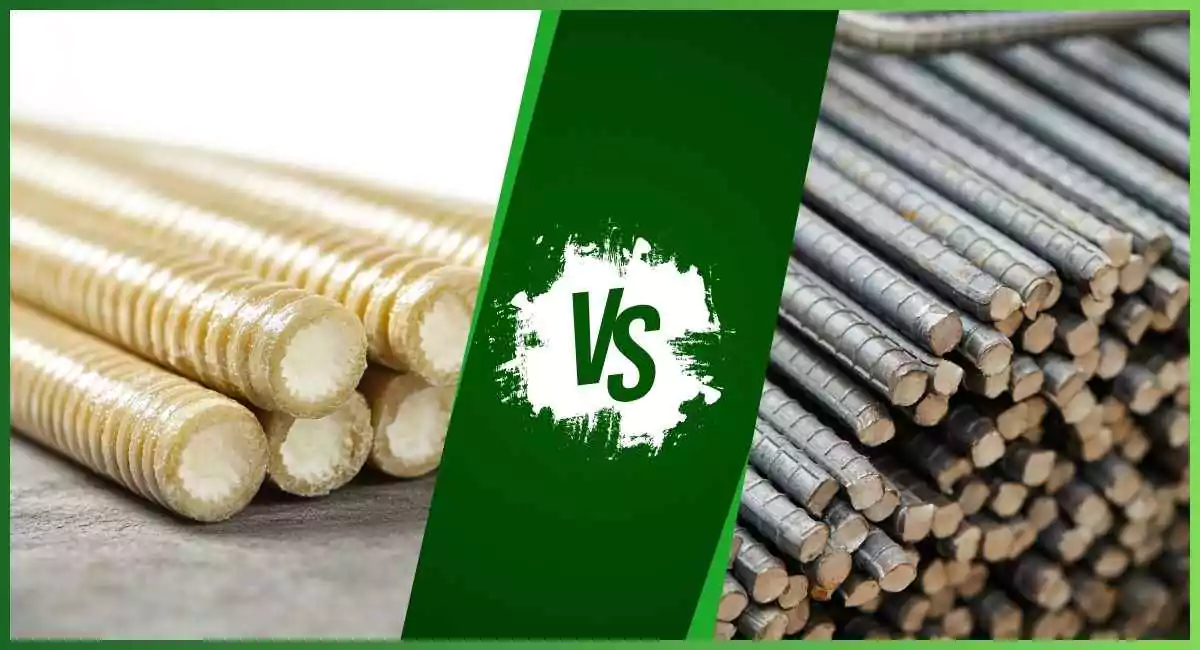
- Density: Typically 0.075 lb/in³ (2.1 g/cm³) — approximately 1/4 the weight of steel rebar
- Longitudinal coefficient of thermal expansion: 4–6 × 10⁻⁶ /°F (similar to concrete, reducing thermal stress)
- Transverse coefficient of thermal expansion: 15–25 × 10⁻⁶ /°F
- Bendability: Minimum bend radius requirements and post-bend strength retention
- Sustainability: Surface enhancement requirements to ensure adequate bond with concrete
- Color coding: Recommendations for surface coding to identify bar size and manufacturer
All ASTM D7957 standard GFRP rebar specifications are designed to work in harmony with the ACI 440.11 design code, which provides the structural design provisions for GFRP-reinforced concrete.
ASTM D7957 Certification Testing Process and Costs
Testing Procedures for ASTM D7957 Certification
Obtaining ASTM D7957 certification requires a manufacturer to submit production samples to an accredited third-party testing laboratory. The testing protocol includes multiple evaluation stages:
- Initial type testing (ITT): Comprehensive testing of all bar sizes and resin systems manufactured, including tensile strength per ASTM D7205, bond strength per ASTM D7913, glass transition temperature per ASTM D7028, and moisture absorption per ASTM D570
- Quality control testing: Ongoing internal testing at defined intervals (typically every production batch or every 10,000 linear feet) to verify consistent quality
- Annual re-certification: Renewal testing conducted annually by an independent laboratory to maintain certification status
- Splice and anchor testing: Verification that bar anchors and splices meet performance requirements if used
Manufacturers must also maintain a written quality control plan documenting all test procedures, sampling frequencies, acceptance criteria, and corrective actions. This plan is subject to audit by the certifying body.
How Much Does ASTM D7957 Certification Cost Per Batch?
ASTM D7957 certification testing cost per batch varies depending on several factors including bar diameter, number of test specimens required, and the testing laboratory used. Typical cost ranges include:
| Testing Component | Estimated Cost Range | Frequency |
|---|---|---|
| Tensile testing per ASTM D7205 (5 specimens) | $500–$1,200 | Per size per batch |
| Bond strength testing per ASTM D7913 | $300–$800 | Per size annually |
| Glass transition temperature (DSC/TMA) | $150–$400 | Per resin system annually |
| Moisture absorption testing | $100–$300 | Per resin system annually |
| Full certification package (all tests, all sizes) | $5,000–$15,000 | Initial certification |
| Annual re-certification audit | $2,000–$5,000 | Annual |
While ASTM D7957 certification testing cost per batch may seem significant, it is a necessary investment for manufacturers seeking to supply ASTM D7957 certified GFRP rebar for construction projects. Most reputable suppliers factor these costs into their pricing and maintain continuous certification.
How to Verify ASTM D7957 Compliance for GFRP Rebar
Documentation Proving ASTM D7957 Compliance for Project Bids
If you are a contractor or specifier, knowing how to verify ASTM D7957 compliance for GFRP rebar shipments is essential. The standard requires manufacturers to provide specific documentation with each shipment, which serves as proof of compliance for project bids and quality assurance records.
What documentation proves ASTM D7957 compliance for project bids? The manufacturer must supply:
- Mill test report (MTR): A certified document listing the mechanical and physical properties of the shipped bars, including tensile strength, modulus, fiber content, and glass transition temperature
- Certificate of compliance (CoC): A signed statement affirming that the product meets all requirements of ASTM D7957, including material composition, dimensional tolerances, and performance criteria
- Third-party certification report: Documentation from an accredited testing laboratory confirming batch testing results
- ISO 9001 quality certificate: Evidence that the manufacturing facility operates under a certified quality management system
- Traceability records: Batch numbers, production dates, and bar markings that allow full traceability from raw materials to finished product
When receiving shipments, always cross-reference the mill test report against the project specifications to ensure compliance.
Who Can Certify ASTM D7957 Compliant GFRP Rebar?
Who can certify ASTM D7957 compliant GFRP rebar in construction? Certification is performed by accredited third-party testing laboratories with the necessary scope and expertise in composite materials testing. Recognized certifying bodies include:
- Intertek: Provides ASTM D7957 compliance testing and certification services through its network of laboratories
- SGS: Offers comprehensive testing for FRP reinforcement materials including ASTM D7205 and ASTM D7913
- UL (Underwriters Laboratories): Certifies GFRP rebar products through its building materials testing program
- ICC-ES (International Code Council Evaluation Service): Issues evaluation reports for GFRP rebar products used in code-compliant construction
- ISO/IEC 17025 accredited laboratories: Any testing laboratory with this accreditation can perform ASTM D7957 testing if within their scope
When evaluating a supplier, always ask which certifying body they use and request copies of current certificates. For how to verify ASTM D7957 compliance for GFRP rebar shipments, check that the certification report is dated within the last 12 months and covers the specific bar sizes being supplied.
ASTM D7957 vs ISO 10406: Which Standard Applies to GFRP Rebar?
For global projects, understanding the difference between ASTM D7957 and ISO 10406 is essential. ASTM D7957 vs ISO 10406: which standard applies to GFRP rebar? The answer depends on your project location and the governing building codes.
| Aspect | ASTM D7957 | ISO 10406 |
|---|---|---|
| Full Title | Standard Specification for Solid Round GFRP Bars for Concrete Reinforcement | Fibre-reinforced polymer (FRP) reinforcement of concrete — Test methods and specification |
| Governing Region | United States (primary), accepted globally | International (ISO member countries) |
| Design Code Interface | Designed to work with ACI 440.11 | Often paired with national FRP design codes or fib bulletins |
| Test Methods Referenced | ASTM D7205, ASTM D7913, ASTM D7028, ASTM D570 | ISO 10406-1 (test methods), ISO 10406-2 (specification) |
| Tensile Strength Basis | Guaranteed tensile strength (mean - 3σ) | Characteristic tensile strength (5% fractile) |
| Size Designation | Imperial bar sizes (#3 through #11) | Metric diameters (6 mm through 32 mm) |
| Quality Control Frequency | Per production batch | Per production lot as defined by manufacturer |
ASTM D7957 vs ISO 10406: which standard applies to GFRP rebar? For projects in the United States, ASTM D7957 is the mandatory specification referenced in the International Building Code (IBC) and ACI 440.11. For projects in Europe, Asia, or other ISO-adopting regions, ISO 10406 may be the applicable standard. Many projects outside the US accept either standard, provided the product meets equivalent performance criteria. When in doubt, specify both — some manufacturers hold dual certification to ASTM D7957 and ISO 10406, making their products acceptable anywhere in the world.
If you are sourcing ASTM D7957 compliant GFRP rebar for an international project, verify with your engineer of record which standard is referenced in the project specifications. This ensures that the reinforcement you purchase will be accepted upon delivery.
ASTM D7957 Compliance Checklist for Project Bids
When preparing or reviewing a project bid that includes ASTM D7957 GFRP rebar, use this practical compliance checklist to ensure all requirements are met:
| # | Checklist Item | Verified? |
|---|---|---|
| 1 | Product specification: Does the supplier product data sheet explicitly reference ASTM D7957? | ☐ |
| 2 | Third-party certification: Has an accredited lab (Intertek, SGS, UL, ICC-ES) tested this product within the last 12 months? | ☐ |
| 3 | Mill test report: Does the MTR show all required properties — tensile strength, modulus, Tg, fiber content, moisture absorption? | ☐ |
| 4 | Bar size verification: Are the specified bar sizes (#3–#11) covered by the current certification? | ☐ |
| 5 | Tensile strength check: Does the guaranteed tensile strength meet or exceed 60,000 psi (414 MPa) for the specified sizes? | ☐ |
| 6 | Dimensional tolerances: Do the bars meet the ±0.015 in (up to #6) or ±0.025 in (#7-#8) tolerances? | ☐ |
| 7 | Resin system: Does the resin system have a minimum Tg of 100°C (212°F)? | ☐ |
| 8 | Traceability: Are bars marked with batch numbers and identifiable through production records? | ☐ |
| 9 | Quality system: Is the manufacturing facility ISO 9001 certified? | ☐ |
| 10 | Design code compatibility: Is the product compatible with ACI 440.11 design provisions? | ☐ |
| 11 | Bond strength: Has bond strength been verified per ASTM D7913 for the specific bar size and surface treatment? | ☐ |
| 12 | Long-term performance: Does the supplier provide creep rupture and fatigue data per ASTM D7337? | ☐ |
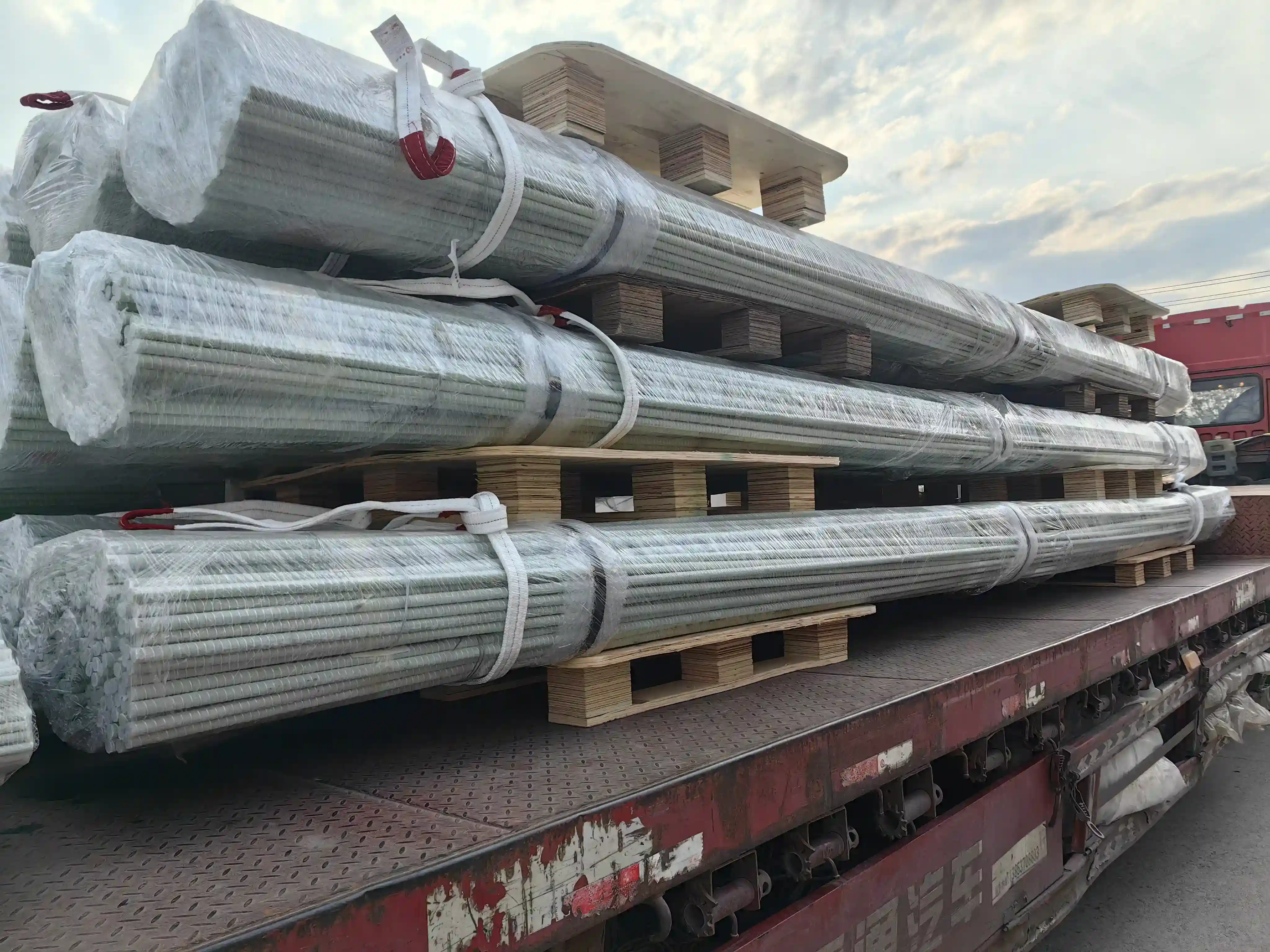
Print this checklist and attach it to your submittal package. For each item, request the corresponding documentation from your GFRP rebar supplier before the bid deadline. A reputable manufacturer of ASTM D7957 certified GFRP rebar for construction will be able to provide all of these documents promptly.
If any item cannot be verified, request a written explanation and a plan for compliance. For critical infrastructure projects, consider requiring that all testing be performed by a specific accredited laboratory to ensure consistency.
Conclusion
The ASTM D7957 GFRP rebar standard provides the essential quality framework for specifying, testing, and using glass fiber reinforced polymer reinforcement in concrete construction. From tensile strength requirements to dimensional tolerances, certification testing processes to compliance documentation, understanding this standard is crucial for engineers, contractors, and project owners who want to leverage the corrosion resistance, light weight, and durability benefits of GFRP reinforcement.
Key takeaways from this guide:
- ASTM D7957 standard GFRP rebar specifications cover solid round bars with minimum fiber content of 70%, guaranteed tensile strength of at least 60,000 psi, and glass transition temperature above 100°C
- ASTM D7957 certified GFRP rebar for construction must undergo initial type testing, ongoing quality control, and annual re-certification by accredited third-party laboratories
- ASTM D7957 compliant GFRP rebar sizes range from #3 through #11, with tight dimensional tolerances designed to work with ACI 440.11 design provisions
- Verifying compliance requires checking mill test reports, certificates of compliance, third-party testing documentation, and traceability records for every shipment
- ASTM D7957 and ISO 10406 serve similar purposes but differ in regional applicability, design code interfaces, and statistical basis for tensile strength values
Whether you are sourcing ASTM D7957 compliant GFRP rebar for a bridge deck, seawall, marine structure, or general concrete reinforcement project, always verify that your supplier maintains current certification from an accredited testing body. Request the documentation checklist items outlined above and retain them as part of your project quality records. When in doubt, consult with the certifying laboratory or your engineer of record to confirm that the specified product meets all ASTM D7957 requirements.
For more information on GFRP rebar specifications, design codes, and applications, explore our related guides on ACI 440.11 design code requirements and GFRP rebar for concrete reinforcement.