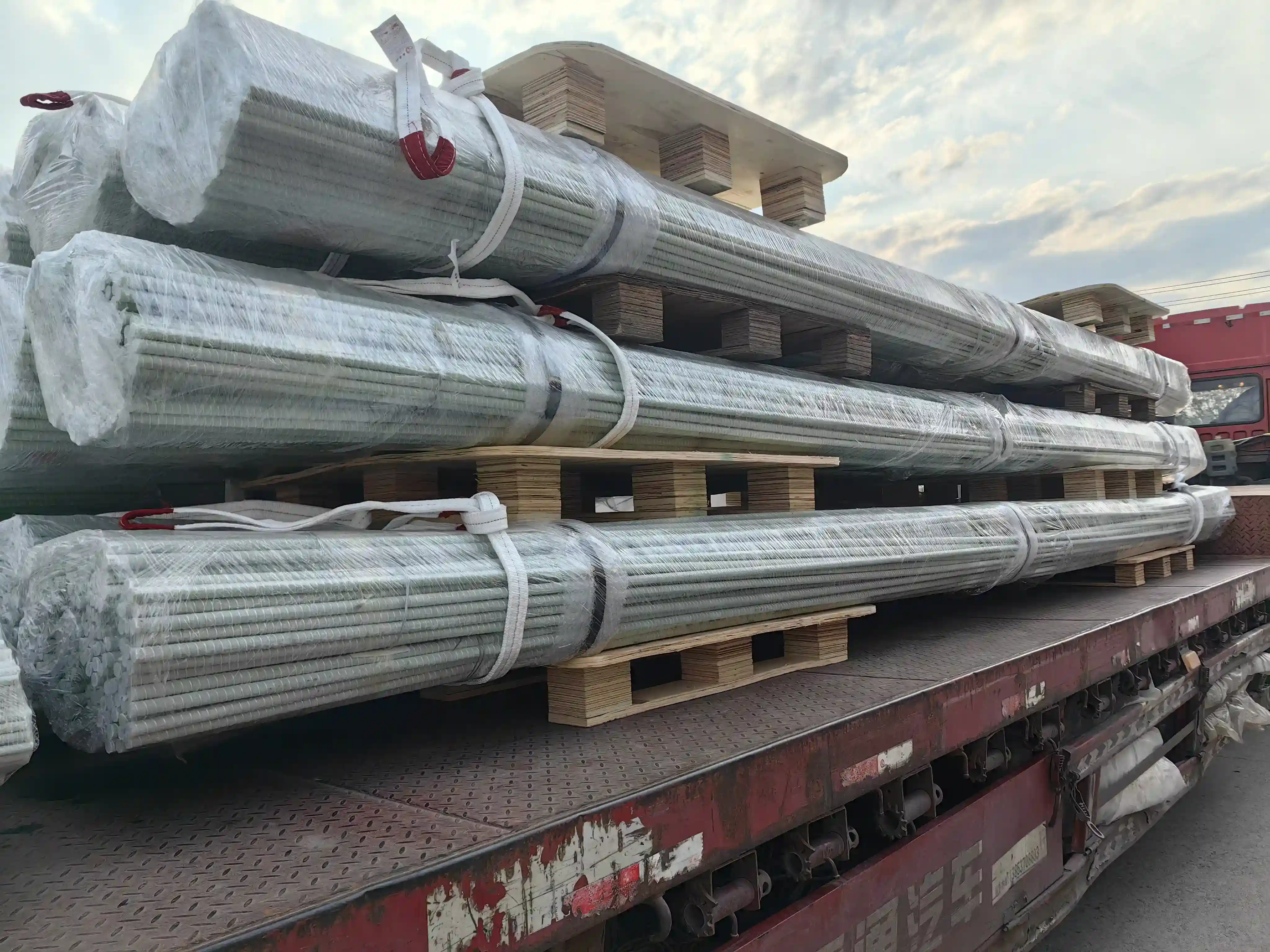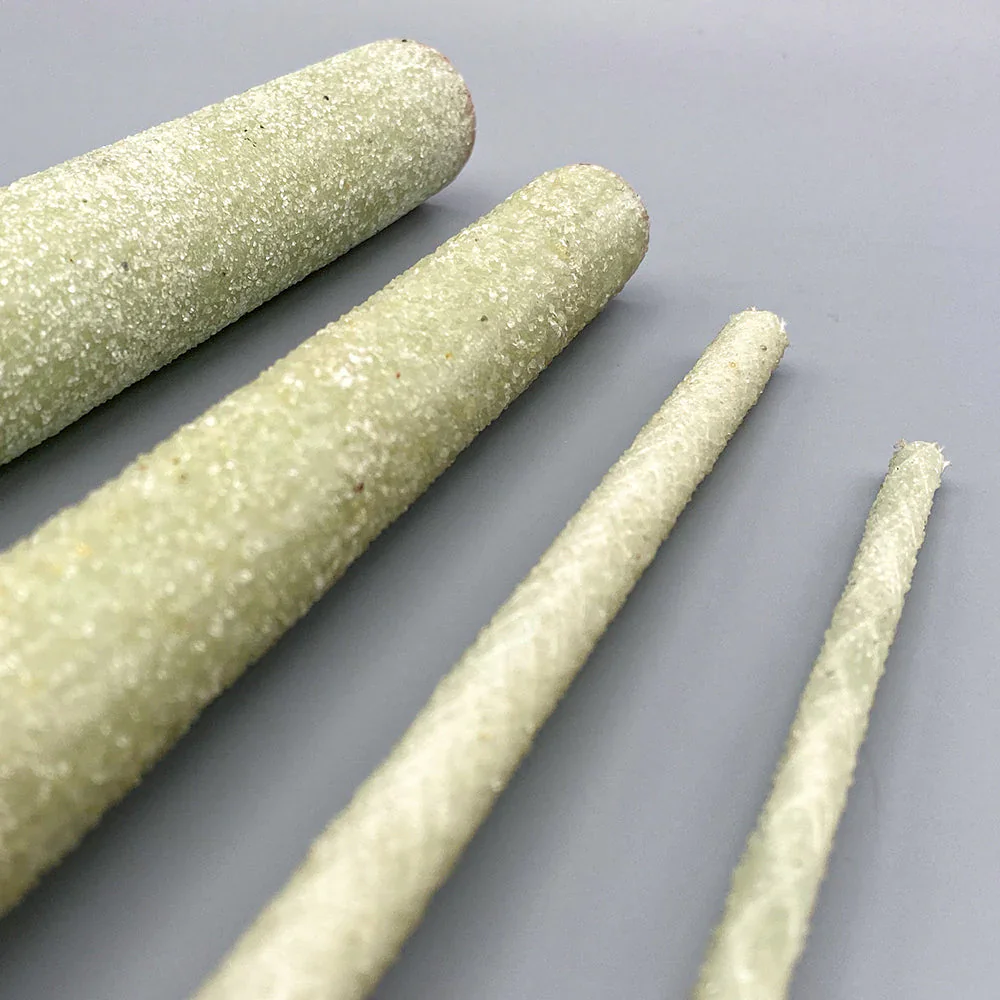
What Is FRP Rebar?
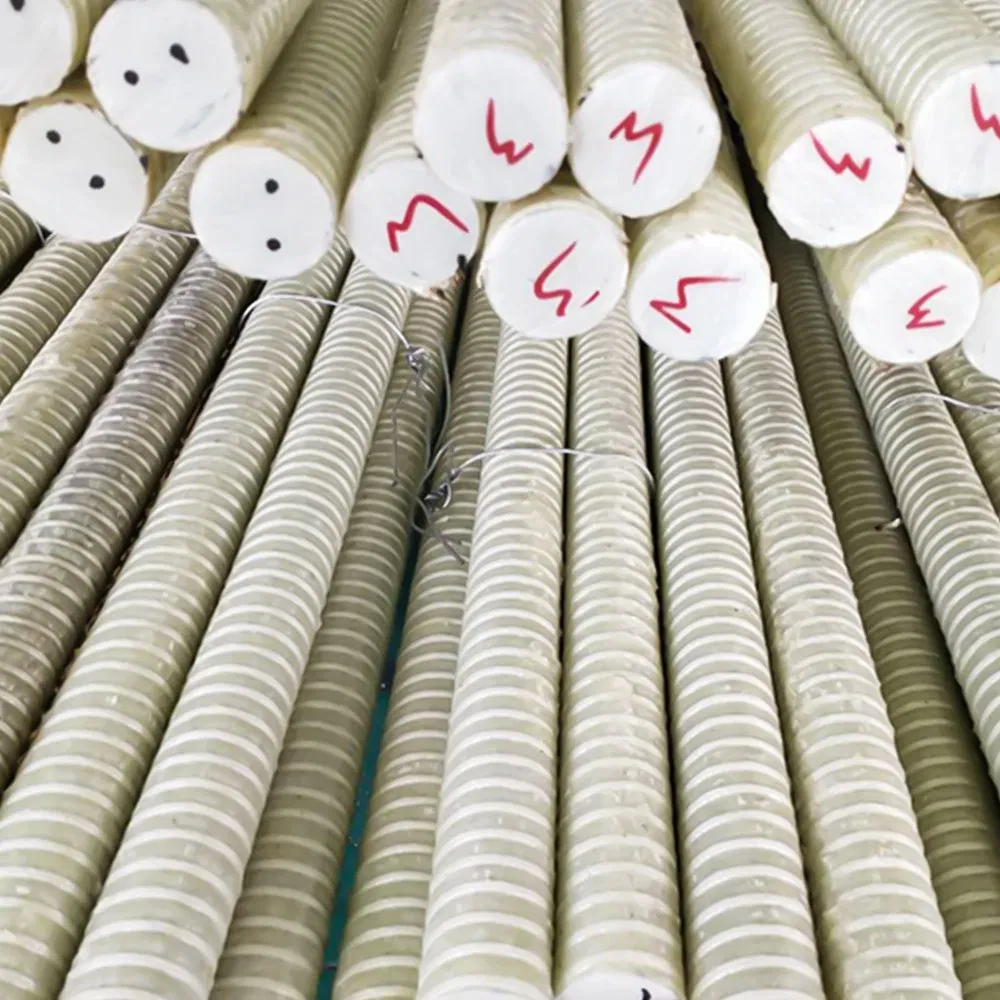
Fiber Reinforced Polymer (FRP) rebar is a non-metallic concrete reinforcement material composed of continuous high-strength fibers embedded in a thermoset polymer resin matrix. Unlike traditional carbon steel rebar, FRP rebar does not corrode, rust, or degrade when exposed to moisture, chlorides, or aggressive chemicals — making it the definitive solution for durability-critical concrete structures.
Glass FRP Rebar
E-CR glass fibers in vinyl ester resin. Best cost-performance ratio. 40+ year commercial track record. Accounts for 95% of global FRP rebar consumption. Supported by ASTM D7957, ACI 440.11, AASHTO, CSA S807.
Carbon FRP Rebar
Carbon fibers in epoxy/vinyl ester. Highest stiffness & strength. 2-3x cost of GFRP. Reserved for specialized applications where maximum modulus is non-negotiable (seismic retrofit, prestressing).
Basalt FRP Rebar
Volcanic basalt fibers. Moderate cost between GFRP and CFRP. Good chemical resistance. Shorter commercial track record and fewer code adoptions vs GFRP.
Bottom line: For 95% of FRP rebar applications — bridge decks, marine structures, parking garages, chemical plants, and waterfront infrastructure — GFRP rebar delivers the best performance-to-cost ratio. For a deeper dive into GFRP specifications and procurement, see our complete GFRP rebar buyer guide.
How Is FRP Rebar Manufactured? — The Pultrusion Process
Understanding how FRP rebar is made is critical for evaluating quality between suppliers. The dominant manufacturing method is pultrusion — a continuous, automated process that combines fiber reinforcement with thermoset resin under precise tension and temperature control.
-
Step 1: Fiber Roving Unwinding & Alignment
Continuous E-CR glass fiber rovings — each containing thousands of individual filaments thinner than a human hair — are pulled from creels and guided through a tensioning system. Precise fiber alignment directly determines final tensile strength. GFRP rebar typically contains 70–75% glass fiber by weight.
-
Step 2: Resin Impregnation
The aligned fiber bundle passes through a resin bath containing premium vinyl ester resin — selected for superior chemical resistance, thermal stability, and long-term durability in alkaline concrete environments. Complete fiber wet-out is essential: any dry spots become failure initiation points under load.
-
Step 3: Forming, Spiral Wrapping & Surface Texturing
The resin-saturated fibers enter a heated forming die that shapes the bar to final diameter. A helical wrap of glass fiber strand creates the deformation pattern for concrete bond. The bar then receives a sand-coated surface finish, maximizing bond strength (tested per ASTM D7957).
-
Step 4: Thermal Curing, Cooling & Cut-to-Length
The formed bar passes through a multi-zone oven where the thermoset resin undergoes irreversible cross-linking ("curing"), permanently locking the fiber-resin matrix. After cooling, the bar is cut to specified lengths (standard: 6m, 12m; custom available), inspected, and bundled.
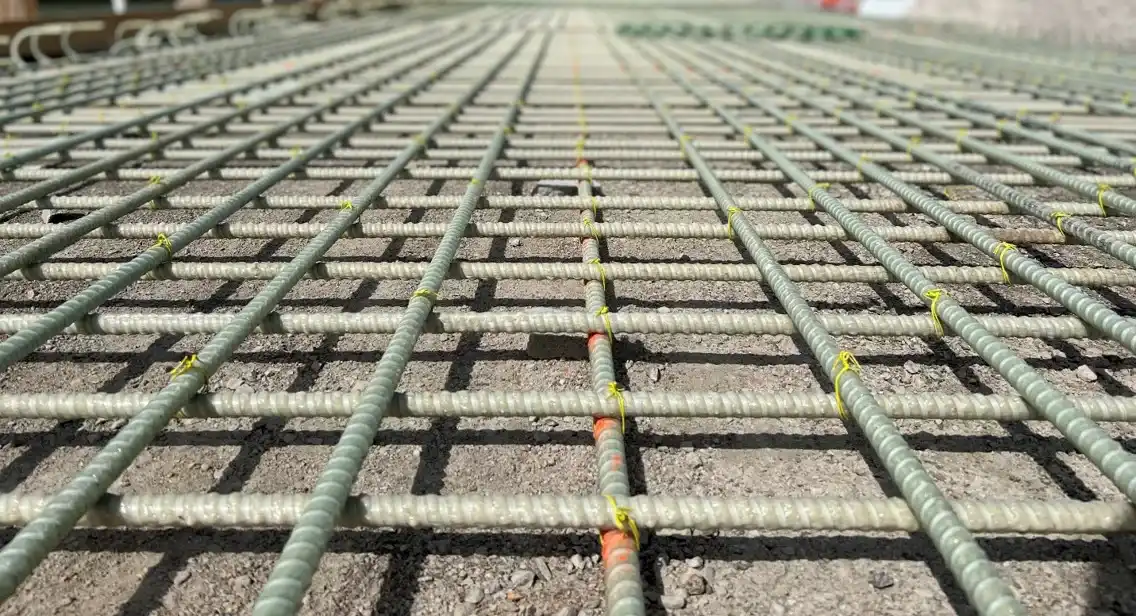
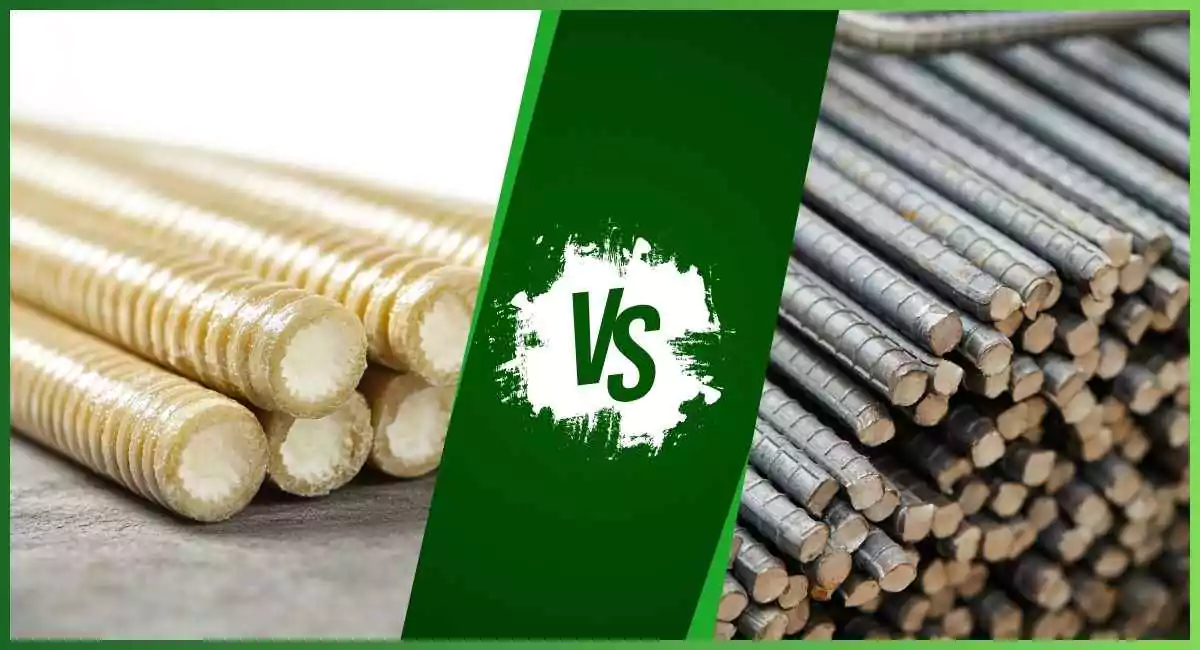
FRP Rebar vs Steel Rebar — Complete Technical Comparison
The decision to specify FRP rebar over conventional steel is a structural engineering choice, not a simple material swap. Below is a 12-dimension comparison that captures the technical trade-offs no competitor guide covers in a single table.
| Parameter | GFRP Rebar | Steel Rebar (Grade 60) | Why It Matters |
|---|---|---|---|
| Tensile Strength | ≥1,000 MPa | ~420 MPa | GFRP is 2×+ stronger per unit area — enables reduced reinforcement ratios in certain designs |
| Tensile Modulus | ≥60 GPa | ~200 GPa | Steel is stiffer — GFRP designs must account for larger deflections (ACI 440.11 provides guidance) |
| Density | ~2.0 g/cm³ | ~7.85 g/cm³ | GFRP is 75% lighter — reduced transport costs, faster installation, safer handling |
| Corrosion Resistance | Immune | Active | GFRP eliminates the #1 cause of concrete deterioration; no epoxy coating or galvanizing needed |
| Service Life | 100+ years | 25–50 years | GFRP eliminates entire lifecycle replacement cost events in aggressive environments |
| Thermal Conductivity | <1 W/m·K | ~50 W/m·K | GFRP eliminates thermal bridging — insulator, not conductor |
| Electrical Conductivity | Non-conductive | Conductive | Safe for MRI facilities, substations, railway signal zones without shielding |
| Magnetic Signature | Non-magnetic | Ferromagnetic | Does not interfere with sensitive electronic equipment or electromagnetic fields |
| Ductility / Yield | Linear elastic | Ductile yield | GFRP requires over-reinforced design per ACI 440.11 (concrete crushes before FRP ruptures) |
| On-Site Bendability | Cannot bend | Field-bendable | All GFRP bends must be factory-manufactured — specify at RFQ stage with shop drawings |
| Initial Material Cost | $2–$8/m | $0.50–$2/m | Higher upfront, lower total cost of ownership when lifecycle maintenance is included |
| Carbon Footprint | Lower | High embodied CO² | GFRP supports LEED credits and sustainability mandates in public infrastructure |
GFRP Rebar Technical Specifications
The following specifications represent a premium ASTM D7957-compliant GFRP rebar manufactured with E-CR glass fiber and vinyl ester resin — the material combination used in the majority of certified infrastructure projects worldwide.
| Parameter | Value | Standard |
|---|---|---|
| Fiber Material | E-CR Glass Fiber | ASTM D7957 |
| Resin System | Premium Vinyl Ester | ASTM D7957 |
| Glass Content (by weight) | 70 – 75% | ASTM D2584 |
| Guaranteed Tensile Strength | ≥1,000 MPa (145 ksi) | ASTM D7205 |
| Tensile Modulus of Elasticity | ≥60 GPa (8,700 ksi) | ASTM D7205 |
| Ultimate Elongation | ≥1.5% | ASTM D7205 |
| Density | ~2.0 g/cm³ (125 lb/ft³) | ASTM D792 |
| Surface Finish | Sand-Coated + Helical Wrap | — |
| Bond Strength (pull-out) | Exceeds ASTM D7957 minimum | ASTM D7913 |
| Service Temperature | -40°C to +100°C | — |
| CTE (longitudinal) | 6–10 × 10⁻⁶ /°C | ASTM D696 |
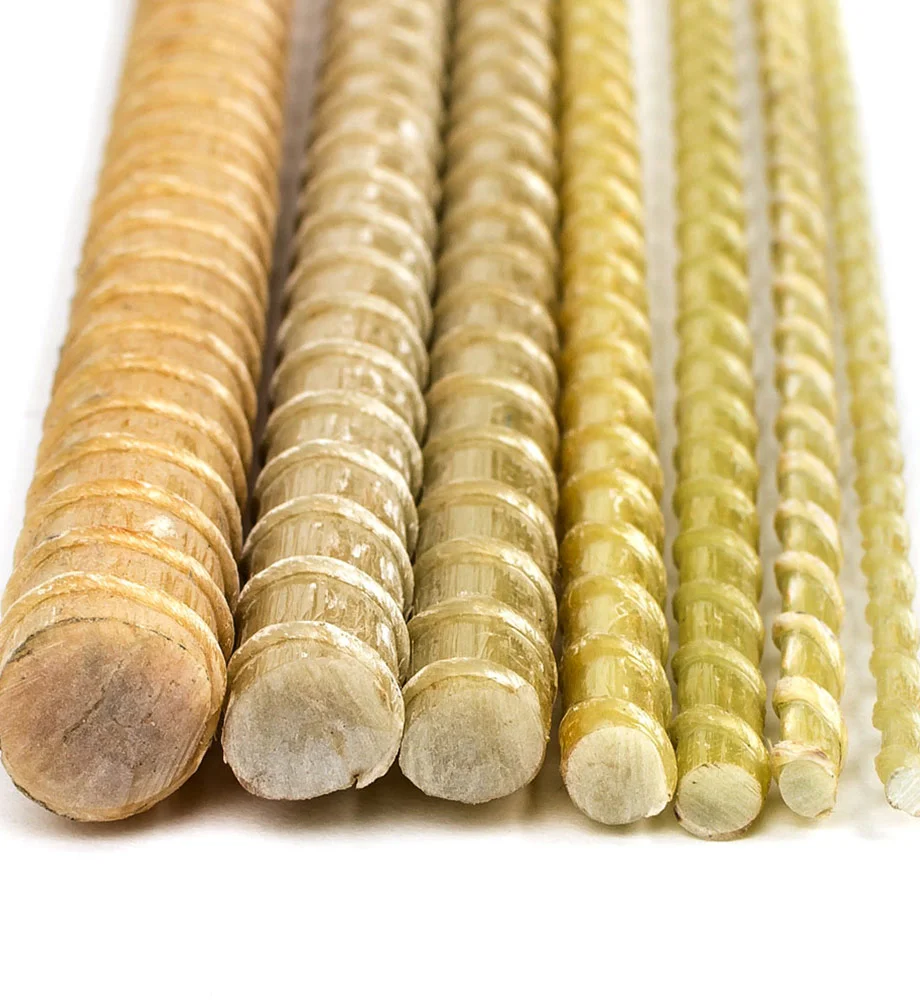
Standard diameters available. Standard lengths: 6m and 12m. Custom diameters and lengths on request.
Key Benefits of FRP Rebar
Complete Corrosion Immunity
FRP rebar does not rust, period. Unlike steel — which begins corroding the moment chlorides penetrate concrete cover — FRP remains chemically inert throughout 100+ year design life. Eliminates concrete spalling, delamination, and the entire cycle of patch repair costing infrastructure owners billions annually.
2×+ Tensile Strength of Steel
At ≥1,000 MPa guaranteed tensile strength, GFRP rebar delivers more than double the tensile capacity of Grade 60 steel (420 MPa). Enables reduced reinforcement ratios or equivalent strength with lighter sections. Trade-off: lower modulus (≥60 GPa vs ~200 GPa) means deflection — not strength — governs design.
75% Lighter Than Steel
At ~2.0 g/cm³, GFRP rebar weighs one-quarter of equivalent steel. Results: smaller crews, faster placement, reduced crane requirements, lower injury risk from heavy lifting. For remote or logistically constrained sites — bridge decks over waterways, offshore platforms, tunnels — the weight advantage can determine project feasibility.
Electrically & Thermally Non-Conductive
GFRP rebar does not conduct electricity or heat, generates no induced currents, and is transparent to electromagnetic fields. Indispensable for MRI suites, high-voltage substations, railway signal zones, airport radar installations. Eliminates the complex grounding and shielding steel demands.
Radar & RF Transparent
GFRP rebar does not reflect or distort electromagnetic waves. For toll plaza RFID lanes, airport instrument landing systems, cellular tower foundations, and military communications infrastructure, GFRP ensures the concrete structure remains "invisible" to sensitive signals — a requirement steel cannot meet.
Factory-Pre-Bent, Consistent Quality
While FRP rebar cannot be field-bent, factory-pre-bent shapes offer an advantage: every stirrup, link, and bent bar is manufactured to precise tolerances under controlled conditions. No heat-affected zones, no weakened sections from jobsite re-bending, no dimensional variability. All bends specified at RFQ stage with shop drawings.
Limitations and Design Considerations
An honest assessment of where FRP rebar falls short of steel. Structural engineers making specification decisions need this section — it's where we address the real concerns raised in engineering forums, design review meetings, and construction QA/QC discussions.
FRP Rebar Applications by Industry
Bridge Decks & Infrastructure
#1 FRP rebar application globally. De-icing salts destroy steel decks in 20–30 years. GFRP: 100-year design, zero corrosion maintenance. Read bridge deck guide →
Marine & Waterfront
Seawalls, docks, piers, quay walls — any concrete exposed to saltwater. Eliminates 15–25 year corrosion-driven replacement cycles. Explore marine solutions →
Chemical & Industrial Plants
Sulfuric acid, chlorides, organic acids — GFRP's vinyl ester resin provides broad-spectrum chemical resistance that even epoxy-coated or stainless steel cannot match.
Tunneling & Underground
TBM soft eyes, tunnel linings, mining infrastructure. Easy cuttability with diamond-blade saws + non-sparking = ideal for confined underground applications.
MRI & Signal-Sensitive Facilities
Hospital MRI suites, high-voltage substations, airport ILS and radar. Non-magnetic, non-conductive, RF-transparent — eliminates complex shielding steel demands.
Precast Concrete Elements
Lightweight for precast panels, double-wall elements, architectural concrete. Reduced deadweight = lower transport and crane costs. Thinner cover = slimmer sections.
ASTM D7957, ACI 440.11, and Global Standards
FRP rebar is supported by a mature, internationally recognized framework of consensus-based standards. When evaluating a supplier, the first question is: Which standards does the product comply with?
| Standard | Scope | Region | Key Requirements |
|---|---|---|---|
| ASTM D7957 | Material specification for solid round GFRP bars | USA Intl | Minimum tensile strength, modulus, Tg, cross-sectional tolerance, fiber content, moisture absorption, alkaline resistance, bend test. The foundational GFRP material standard. |
| ACI 440.11-22 | Building code for GFRP-reinforced structural concrete | USA | Beams, slabs, columns, walls. Strength reduction factors, minimum reinforcement, deflection limits, crack control, development/splice lengths. Mandatory for US GFRP projects. |
| AASHTO LRFD GFRP Guide | Bridge-specific GFRP design provisions | USA | Deck design for HS-20/HL-93 loading, fatigue, environmental reduction factors per exposure condition. |
| ICC-ES AC454 / ESR-4526 | Product evaluation and code compliance | USA | Verifies manufacturer's product meets ASTM D7957 and is code-compliant under IBC/IRC. Ask: "Do you have an active ICC-ES evaluation report?" |
| CSA S807:19 | Specification for FRP reinforcing bars | Canada | Canadian material and test standard. Similar scope to ASTM D7957 with additional durability requirements for Canadian climate. |
| CE Marking / EAD | European conformity assessment | EU/EEA | EAD testing, factory production control (FPC) by notified body, Declaration of Performance (DoP). Required for FRP rebar sold in the European Economic Area. |
For a deeper technical discussion of ASTM D7957 testing requirements — tensile test preparation, bend test criteria, and alkaline resistance — see our ASTM D7957 certification guide.
FRP Rebar Cost and Lifecycle Value Analysis
"FRP rebar costs more than steel" — true at the material invoice level, deeply misleading at the project level. Let's break down the real economics.
Initial Material Cost (12mm diameter)
| Material | Price/m | vs Baseline |
|---|---|---|
| Carbon Steel (black) | $0.80 – $1.50 | 1.0× |
| Epoxy-Coated Steel | $1.50 – $2.50 | 1.5–2.0× |
| Galvanized Steel | $2.00 – $3.50 | 2.0–3.0× |
| Stainless Steel 316 | $6.00 – $10.00 | 6.0–10.0× |
| GFRP (ASTM D7957) | $2.00 – $5.00 | 2.0–4.0× |
Lifecycle Cost Drivers
No cover needed for corrosion — only for bond & fire. Less concrete = lower material cost.
No epoxy coating, galvanizing, cathodic protection, or corrosion inhibitors needed.
Steel bridge deck replacement: $500–$2,000/m². GFRP eliminates this entirely.
vs 25–50 years for steel in aggressive environments. NPV advantage at 3–5% discount: 2–5× premium.
How to Choose an FRP Rebar Supplier — 6-Step RFQ Checklist
Not all FRP rebar is manufactured to the same standard. The difference between premium ASTM D7957-certified GFRP rebar and a substandard product that fails in service comes down to verification before ordering.
-
1 Verify Material Certification
Request current ASTM D7957 test reports — tensile strength, modulus, Tg, cross-sectional area for every diameter needed. Legitimate manufacturers provide batch-level certificates. North America: "Do you have an active ICC-ES evaluation report?" EU: "Provide CE certificate and Declaration of Performance."
-
2 Audit Production Capacity & Lead Time
Annual GFRP rebar capacity? Pultrusion lines dedicated to rebar? Lead times for 50-ton, 200-ton, and 500-ton orders? A supplier with 15,000+ tons delivered and 500+ projects has proven operational maturity for large infrastructure orders.
-
3 Confirm Full Diameter Range & Surface Finish
Does the supplier stock 6mm–32mm, or only select sizes? Is sand-coated surface standard? Can they produce custom deformation patterns? Verify all diameters are covered by ASTM D7957 certification — some manufacturers certify only popular sizes.
-
4 Factory Pre-Bending Capability
Submit shop drawings. Confirm every bent shape can be manufactured. Request bend radius specs and verify bent sections meet the same tensile requirements as straight sections (per ASTM D7957 bend test). Factory pre-bending adds lead time — factor into schedule.
-
5 Request Samples & Third-Party Test
Before large orders, get physical samples. Send to independent lab for tensile strength, modulus, and cross-sectional area verification against supplier claims. A $1,000 test can prevent a $500,000 rebar order rejection on site.
-
6 Logistics, Export Experience & Payment Terms
If importing: confirm HS code (7019.19 for GFRP rebar), FOB/CIF pricing, packaging, shipping docs. A supplier exporting to 35+ countries across NA, Europe, and the Middle East has proven logistics infrastructure. Request payment terms and MOQ per diameter.
For a comprehensive supplier evaluation — including factory-direct pricing, MOQ, and ASTM D7957 compliance details — visit our ASTM D7957 certified GFRP rebar supplier page.
Frequently Asked Questions
FRP stands for Fiber Reinforced Polymer — a composite of continuous high-strength E-CR glass fibers embedded in a vinyl ester thermoset resin matrix. The result: non-metallic concrete reinforcing bar immune to corrosion, 75% lighter than steel, with ≥1,000 MPa tensile strength. GFRP (glass) is the most widely used variant for concrete reinforcement, supported by 40+ years of real-world infrastructure use and a full framework of consensus-based design codes including ASTM D7957, ACI 440.11, and AASHTO LRFD.
Four main limitations: (1) Lower elastic modulus (~60 GPa vs steel's ~200 GPa) — deflection governs design rather than strength. (2) Brittle failure mode — no plastic yield before fracture, requiring over-reinforced design per ACI 440.11. (3) Cannot be field-bent — all bends must be factory-manufactured and specified at RFQ stage with shop drawings. (4) Higher initial material cost (2–4× black steel) — offset by lifecycle maintenance savings in corrosive environments. Each is a manageable design constraint, not a fatal flaw.
Yes — easier than cutting steel. Use a diamond-blade circular saw, angle grinder with masonry blade, or carbide-tipped saw. No torches, no special equipment. Important: always wear respiratory protection — cutting generates fine glass fiber dust. Use wet-cutting methods to suppress dust. Unlike steel, FRP rebar does not spark when cut, making it safer near flammable materials and in confined underground environments.
Three key differences: (1) FRP does not corrode — steel does, the #1 cause of global concrete deterioration. (2) FRP is 2× stronger but 70% less stiff — this changes structural design (ACI 440.11 governs). (3) FRP is 75% lighter — reducing transport, handling, and installation costs. The right choice depends on exposure environment: FRP is superior in corrosive or electromagnetically sensitive settings; steel remains economical for standard indoor applications. See the 12-dimension comparison table above for a complete technical breakdown.
Fire performance depends on the resin system and concrete cover thickness. Glass fibers withstand temperatures above 800°C, but the polymer resin matrix softens at its glass transition temperature (Tg), typically 100–150°C for standard vinyl ester. ACI 440.11 currently limits FRP rebar use in structures requiring fire resistance ratings. For fire-critical applications, consult specific code provisions in your jurisdiction and discuss high-Tg resin formulations with your supplier.
Per linear meter, GFRP rebar costs 2–4× black steel but is cost-competitive with epoxy-coated and galvanized steel, and dramatically cheaper than stainless steel. When lifecycle costs are included — eliminated maintenance, 100+ year service life, thinner concrete cover, zero corrosion protection — GFRP frequently delivers 30–50% lower total cost of ownership. For a bridge deck in a northern climate with de-icing salt exposure, GFRP lifecycle NPV can be significantly lower than steel.
Yes — typically in different elements of the same structure, each designed per its respective code. GFRP is non-metallic, so it can be placed adjacent to steel without galvanic corrosion risk. A common hybrid: GFRP in the top mat of a bridge deck exposed to de-icing salts, steel in the protected bottom mat. Each element must be designed per its governing standard — ACI 440.11 for GFRP sections, ACI 318 for steel sections.
Standard GFRP rebar diameters: 6mm, 8mm, 10mm, 12mm, 16mm, 20mm, 25mm, 32mm. Most commonly specified for infrastructure: 10mm, 12mm, 16mm. Standard lengths: 6m and 12m. Custom diameters and lengths available on request. Always verify that all diameters needed are covered by the supplier's ASTM D7957 certification — some manufacturers certify only popular sizes and offer other diameters as non-certified product.
Request a Factory Quote for GFRP Rebar
Specify diameters, quantities, and project requirements. Our engineering team provides a detailed quotation with ASTM D7957 compliance documentation, lead time estimate, and FOB/CIF shipping options — typically within 24 hours.
Request Factory Quote →