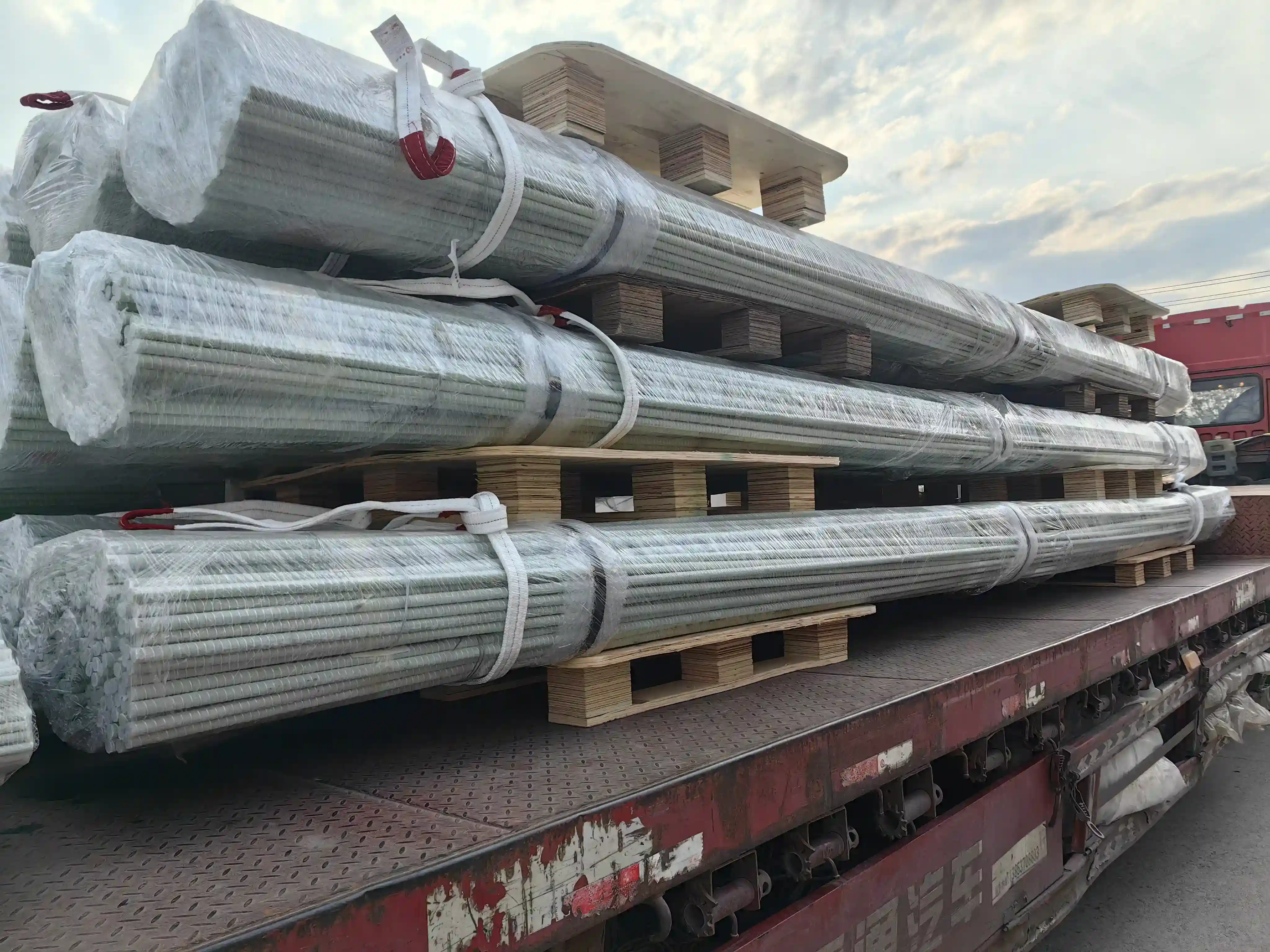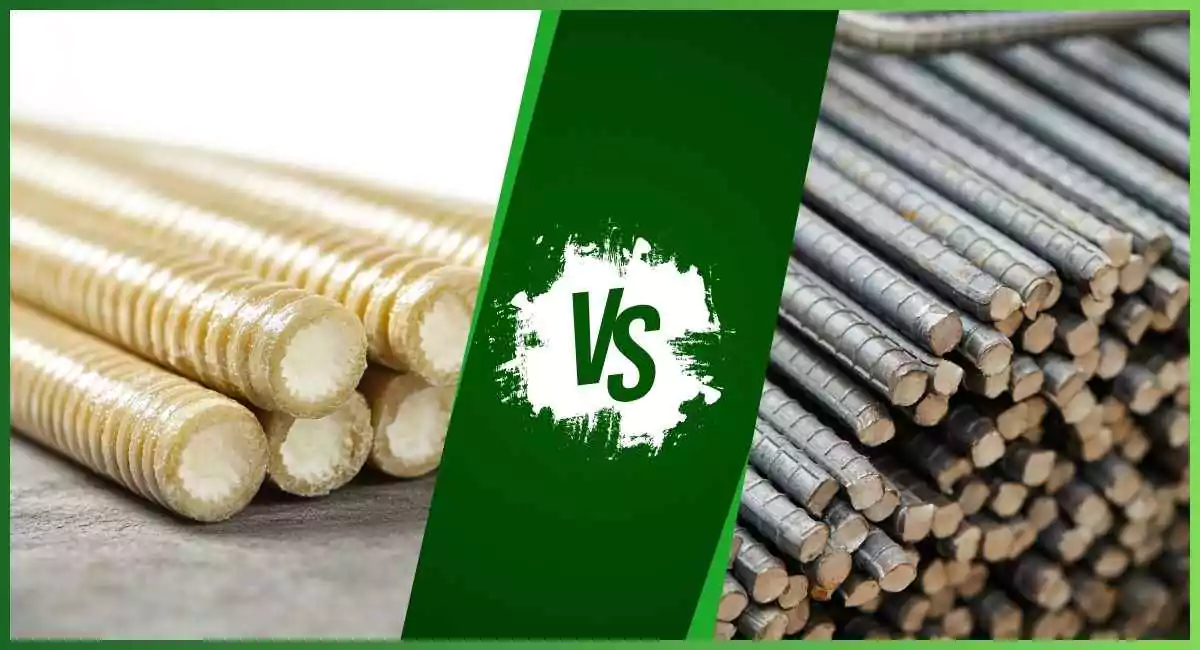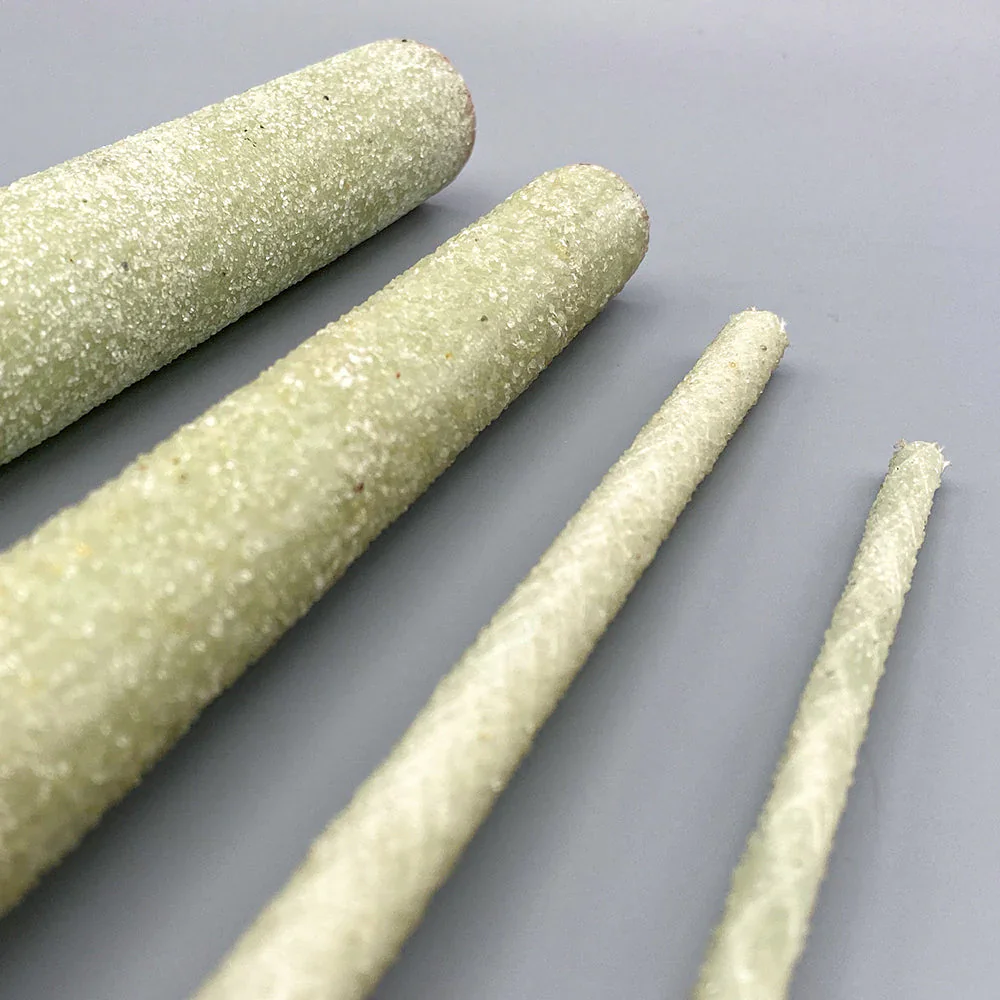
Why Choosing the Right FRP Rebar Manufacturer Matters
Not all FRP rebar is created equal. Two bars that look identical on a datasheet can perform dramatically differently in concrete — one lasting 100+ years, the other delaminating within 5. The difference comes down to one decision: which manufacturer you choose.
The FRP rebar market has grown rapidly over the past decade, attracting both legitimate composite manufacturers with decades of pultrusion expertise and opportunistic entrants with minimal quality control. ASTM D7957 certification provides a baseline, but certification alone is not enough — you need to evaluate how consistently a manufacturer meets that standard across every production batch, every diameter, and every shipment.
This guide gives structural engineers, procurement managers, and project owners a systematic, six-criteria framework for evaluating FRP rebar manufacturers — what to verify, what to ask, and what to avoid. No competitor provides a structured evaluation methodology; this is the guide the commercial FRP rebar industry has been missing.
The 6-Criteria FRP Rebar Manufacturer Evaluation Framework
Evaluating an FRP rebar manufacturer is not a single-variable decision. Price alone is never enough — a cheap product that fails ASTM D7957 testing will cost far more in project delays, on-site rejection, or structural remediation than any upfront savings. Conversely, the most expensive manufacturer is not automatically the best.
Use this six-criteria framework to evaluate every manufacturer systematically. Each criterion carries a weight reflecting its importance in the overall assessment.
Certifications
ASTM D7957, ICC-ES, CE marking — verifiable third-party compliance documentation
Weight: 30%Quality Control
Batch testing frequency, lab accreditation, traceability, non-conformance handling
Weight: 25%Production Capacity
Annual tonnage, dedicated rebar lines, lead times, project references at scale
Weight: 15%Product Range
Diameter coverage, surface finishes, factory pre-bending, customization capability
Weight: 10%Pricing & Commercial
FOB/CIF pricing transparency, volume tiers, payment terms, quote turnaround
Weight: 10%Logistics & Support
Export experience, customs documentation, packaging, after-sales engineering support
Weight: 10%Criterion 1: Certifications — The Non-Negotiable Gate (30%)
If a manufacturer cannot produce current, independently verifiable third-party certification documents, stop evaluating immediately. This is a binary gate — pass or fail. No certification = no order, regardless of how attractive the price or how smooth the sales pitch.
But certification alone is the floor, not the ceiling. Two manufacturers can both hold ASTM D7957 certification while producing dramatically different quality — one tests every batch and maintains tight statistical process control, the other tests the minimum required and ships borderline product. The certification verifies the product can meet the standard; quality control (Criterion 2) verifies it consistently does.
Essential Certifications by Region
| Certification | Region | What It Verifies | How to Independently Verify |
|---|---|---|---|
| ASTM D7957 | USA Global | Tensile strength ≥ threshold, tensile modulus, glass transition temperature (Tg), fiber content by weight, cross-sectional area tolerance, moisture absorption limits, alkaline resistance, and bend test performance. The foundational material specification for solid round GFRP bars. | Request batch-level test certificates from the manufacturer. Independently verify by sending samples to an ISO 17025 accredited lab for tensile testing per ASTM D7205. |
| ICC-ES AC454 (ESR) | USA | Product code compliance under IBC and IRC. An active Evaluation Service Report (ESR number) confirms the manufacturer's specific product meets ASTM D7957 requirements and is approved for structural use in US building projects. | Search the ICC-ES directory at icc-es.org by the manufacturer's ESR number. Verify: (a) the report status is "Active" not "Expired" or "Withdrawn," (b) the product name matches what you're buying, and (c) the diameters you need are listed in the report's scope. |
| ACI 440.11 Design Compatibility | USA | The manufacturer's published guaranteed tensile strength (ffu*), guaranteed modulus (Ef), and environmental reduction factor (CE) are compatible with ACI 440.11-22 design methodology. Design values must be derived from statistical analysis of test data per ASTM D7957 Section 9. | Ask: "Provide your guaranteed tensile strength and modulus values with the number of test specimens, mean, standard deviation, and statistical basis per ASTM D7957 Section 9.6." A legitimate manufacturer provides this data without hesitation. |
| ISO 9001:2015 | Global | Quality management system — documented, controlled, and externally audited manufacturing processes. Does NOT verify product performance — it verifies that the manufacturer has systems to produce consistent quality. | Request the ISO certificate with the issuing body's accreditation mark (e.g., UKAS, ANAB, DAkkS). Verify on the certification body's online certificate database. Check the scope of certification: does it specifically state "manufacture of fiber reinforced polymer (FRP) reinforcing bars" or just "composite products"? |
| ISO 17025 Lab Accreditation | Global | The manufacturer's in-house testing laboratory (if they have one) meets international competence standards for calibration and testing. Required for test data to be considered valid by most project specifications. | Request the lab's scope of accreditation. Verify it covers composite tensile testing per ASTM D7205/D7205M and glass transition temperature per ASTM D7028 (DMA method). If the manufacturer uses an external lab, request that lab's accreditation instead. |
| CE Marking (EAD 160019-00-0301) | EU/EEA | European conformity assessment for FRP rebar. Requires Factory Production Control (FPC) certification issued by an EU notified body, initial type testing per the European Assessment Document, and a Declaration of Performance (DoP). | Request: (a) CE certificate with the notified body's 4-digit NB number, (b) FPC certificate from the same notified body, and (c) Declaration of Performance listing all declared properties. Verify the NB number on the EU NANDO database at ec.europa.eu. |
| CSA S807:19 | Canada | Canadian specification for FRP reinforcing bars. Similar scope to ASTM D7957 with additional durability testing requirements specific to Canadian climate conditions and freeze-thaw exposure. | Request CSA-certified test reports for every diameter. Canadian projects typically require CSA-certified product — ASTM D7957 alone may not satisfy specification requirements north of the border. |
Criterion 2: Quality Control — Where Certifications Meet Reality (25%)
Certification tells you the product can meet the standard. Quality control tells you it does — every batch, every diameter, every shipment. A manufacturer that passes ASTM D7957 type-testing once and coasts on that certificate for years without rigorous ongoing QC is not a quality manufacturer — they are a certification holder, which is not the same thing.
The 7 QC Questions Every Buyer Must Ask
ASTM D7957 Section 9 specifies the minimum: 5 tensile specimens per batch, tested per ASTM D7205. A quality manufacturer exceeds this — testing 8–10 specimens per batch for statistical significance. Ask: "Do you test every production batch, or only periodic samples? Do you test every diameter every day, or rotate through sizes? What is your criterion for batch acceptance — mean above guaranteed, or every individual specimen above the 5th percentile?"
The guaranteed tensile strength per ASTM D7957 must be the mean minus three standard deviations (μ − 3σ) of at least 25 test specimens. If a manufacturer cannot explain this statistical basis, they do not understand the certification they claim to hold.
In-house testing is perfectly acceptable — IF the lab is ISO 17025 accredited. An unaccredited lab's test data should be treated as unverified. The scope of accreditation must specifically cover the test methods used: ASTM D7205 (tensile properties of polymer matrix composites), ASTM D7028 (Tg by DMA), and ASTM D2584 (ignition loss for fiber content).
If the manufacturer uses an external lab, verify that lab's ISO 17025 accreditation independently. Request the lab's test reports directly — not summarized or retyped by the manufacturer. Raw lab reports carry the lab's letterhead, signature, and accreditation mark.
Every manufacturer has failed batches — the difference is what happens next. A quality manufacturer: (a) immediately quarantines the non-conforming batch, (b) conducts root cause analysis (resin mix ratio? curing temperature deviation? fiber tension issue?), (c) implements corrective action, (d) re-tests after correction, and (e) documents everything. Crucially, they never ship non-conforming product — even at a loss.
Ask: "What was your last non-conformance? What caused it? What did you change?" If they claim they've never had a failed batch — they are either lying or not testing properly. A 100% pass rate over years of production is statistically impossible for composite manufacturing.
Full material traceability means every rebar bundle can be traced backward through the entire manufacturing chain: bundle ID → production date and shift → pultrusion line and operator → resin batch number → glass fiber lot number → fiber manufacturer certificate of analysis. This is essential for infrastructure projects requiring material pedigree documentation and is standard practice in aerospace and defense composites — it should be standard for FRP rebar too.
Tg is the temperature at which the cured resin transitions from a rigid glassy state to a softened rubbery state — it indicates whether the resin was properly cured during pultrusion. Under-cured rebar has low Tg and will lose mechanical properties prematurely in service, especially in hot climates.
Request Tg by ASTM D7028 (Dynamic Mechanical Analysis — DMA method). Do not accept DSC (Differential Scanning Calorimetry) data — DSC gives different, typically lower Tg values and is not the method specified in ASTM D7957. A quality manufacturer's Tg should be ≥100°C by DMA with low variability (coefficient of variation <5%). High Tg variability between batches indicates an unstable curing process.
Post-production testing catches failures; in-line process controls prevent them. Quality manufacturers monitor continuously during production: pulling speed (affects cure time in the die), die zone temperatures (multiple heating zones must maintain profile), pulling force (indicates resin viscosity and fiber wet-out quality), and bar diameter (laser micrometer for real-time dimensional check). Ask: "What parameters do you monitor in real time, and what are your control limits? Can you show me your control charts for the most recent production week?"
Concrete is highly alkaline (pH 12–13). Over decades, this alkalinity can attack the glass fibers if the resin does not provide adequate protection. ASTM D7957 requires alkaline resistance testing — glass fiber strands immersed in an alkaline solution at elevated temperature for a specified duration, then tested for residual tensile strength. The acceptance criterion: retained tensile strength ≥70% of unexposed control specimens.
Many manufacturers skip this test because it's time-consuming (typically 30–90 days). If a manufacturer cannot produce alkaline resistance data, they are either not testing to the full ASTM D7957 scope or are withholding unfavorable results. Either way — treat it as a significant concern.
Criterion 3: Production Capacity — Can They Deliver at Your Scale? (15%)
A manufacturer with one shared pultrusion line and a backlog of small orders cannot deliver 500 tons on your project timeline. Production capacity must be evaluated in terms of rebar-dedicated capacity and proven delivery track record — not total factory square footage or employee count.
| Capacity Indicator | What to Ask | Green Flag | Red Flag |
|---|---|---|---|
| Annual output | "What is your annual GFRP rebar production capacity in tons?" | 5,000+ tons/year | < 1,000 tons/year or "depends" |
| Dedicated pultrusion lines | "How many pultrusion lines are dedicated exclusively to rebar production?" | 3+ rebar-dedicated lines | 1 line shared with profiles/grating |
| Lead time — 50 tons | "What is your current production lead time for a 50-metric-ton order?" | 2–4 weeks | 8+ weeks or "we'll check" |
| Lead time — 200 tons | "And for a 200-ton order with multiple diameters?" | 4–8 weeks | Cannot commit to a date |
| Project references | "Provide contact details for 3 infrastructure-scale project references." | 500+ projects, bridge/marine refs | "We're new but..." or vague claims |
| Export experience | "Which countries? Provide a reference for a containerized export shipment." | 20+ countries, logistics refs | No export documentation or references |
| Raw material security | "Who supplies your E-CR glass fiber and vinyl ester resin? Do you have multi-source supply agreements?" | Named suppliers, dual-source where possible | Can't or won't name suppliers |
Criterion 4: Product Range — One Size Does Not Fit All (10%)
A manufacturer that offers only #3 and #4 rebar is serving the residential and light commercial market — not infrastructure. Before evaluating further, confirm they can supply every diameter your project requires, certified to the relevant standard.
Product Line Checklist
| Requirement | What to Verify |
|---|---|
| Diameter range | 6mm–32mm, every diameter individually certified |
| Surface finish | Sand-coated standard; custom textures available |
| Deformation pattern | Helical wrap (standard); custom rib angles available |
| Factory pre-bending | Stirrups, links, bent shapes — manufactured and cured in-factory |
| Standard lengths | 6m and 12m; custom cut-to-length on request |
| Custom diameters | Available with extended lead time and separate certification |
Diameter Quick Reference
| Diameter | Typical Application |
|---|---|
| 6mm – 8mm | Precast panels, architectural concrete, thin sections, non-structural elements |
| 10mm – 12mm | Bridge decks, parking structures, slabs-on-grade, residential foundations |
| 16mm – 20mm | Heavy infrastructure, seawalls, marine structures, retaining walls |
| 25mm – 32mm | Deep foundations, industrial floors, hydraulic structures, high-load columns |
Manufacturing Process — Quality Indicators in the Production Line
Beyond certifications and QC documents, the manufacturing process itself reveals quality. When you visit a factory or review production videos, look for these indicators:
Green Flags
- Glass fiber rovings stored in climate-controlled area (not exposed to humidity)
- Resin bath temperature monitored and controlled (±2°C tolerance)
- In-line laser micrometer checking bar diameter continuously
- Die heating zones individually monitored with digital controllers
- Pull force recorded — deviations indicate resin viscosity changes
- Finished bars stored indoors, off the ground, protected from UV exposure
- QC lab adjacent to production floor — not in a separate building
Warning Signs
- Fiber rovings stored outdoors or in unconditioned warehouse
- Manual resin mixing by operators (no automated metering/mixing)
- No in-line measurement equipment visible on the production line
- Finished bars stored outdoors exposed to sun and rain
- QC testing area is a corner desk with a single handheld gauge
- Production floor is disorganized — raw materials mixed with finished goods
- No personal protective equipment (PPE) on operators handling chemicals
Criterion 5: Pricing & Commercial Terms (10%)
A technically perfect manufacturer that cannot provide transparent pricing, competitive payment terms, or clear commercial documentation is a procurement risk. The commercial evaluation is as important as the technical one — perhaps more so, because project budgets depend on it.
How to Compare Quotes Between Manufacturers
Not all quotes are structured the same way. Use this normalization method to compare apples-to-apples:
| Quote Element | What to Standardize | Watch For |
|---|---|---|
| Price basis | Convert everything to price per meter per diameter. Some manufacturers quote per kilogram, others per linear meter, others per ton. Per-meter is the most useful for engineering takeoffs. | Per-kg pricing obscures the fact that heavier bars (more resin, less fiber) cost more per meter without delivering more strength. |
| Incoterms | Standardize to FOB (Free On Board) for comparison, then add freight separately. FOB port-of-loading is the cleanest comparison baseline. | A CIF quote looks cheaper because freight is bundled — but the manufacturer may use slow or unreliable shipping lines to keep their bundled cost low. |
| Volume tiers | Request pricing at the exact tonnage you need AND the next tier up. Sometimes 10% more volume unlocks a 15% lower unit price — the total cost goes down. | Manufacturers who won't disclose volume discount thresholds before you place an order. |
| Payment terms | Standard international: T/T 30% advance, 70% against copy of documents. Letter of Credit (L/C at sight) available for larger orders. | 100% advance payment demanded — this shifts all risk to the buyer and is a major red flag for international trade. |
| Validity period | Quote should be valid for 15–30 days minimum. Raw material prices (glass, resin) fluctuate — a quote valid for only 48 hours signals they're speculating on materials. | "Price subject to change without notice" or no validity period stated. |
| MOQ per diameter | Minimum Order Quantity should be clearly stated per diameter. Typical: 500–1,000 linear meters for standard diameters. | MOQ not disclosed until after you've invested time in technical evaluation. |
Criterion 6: Logistics, Export & After-Sales Support (10%)
A technically qualified manufacturer that cannot deliver on time, provide proper customs documentation, or support you when questions arise after delivery is a failed procurement waiting to happen.
Shipping & Documentation
After-Sales & Engineering Support
China vs US vs EU Manufacturers — The Regional Reality
FRP rebar manufacturing has distinct regional profiles that affect cost, certification pathways, lead times, and suitability for different project types. Understanding these differences enables you to target the right region for your project's constraints.
| Factor | China Manufacturers | US Manufacturers | EU Manufacturers |
|---|---|---|---|
| Typical Pricing (FOB, 12mm) | $2.00 – $4.50/m | $5.00 – $9.00/m | $5.50 – $10.00/m |
| Annual Capacity | Largest globally | Growing, limited | Boutique scale |
| Certifications Available | ASTM D7957, ICC-ES, ISO 9001, CE — verify each independently | ASTM, ICC-ES, ACI — strong domestic certification culture | CE, ETA, EN standards — required by law for EU market access |
| Total Lead Time (incl. ocean freight) | Production: 3–6 weeks + Freight: 4–6 weeks | 2–4 weeks (domestic truck/rail) | 2–6 weeks (regional road/rail) |
| MOQ | 500–1,000m per diameter; total order typically 5+ tons | Flexible — small orders accepted at premium pricing | Moderate — varies by manufacturer |
| Best For | Large infrastructure orders, cost-sensitive international procurement, projects requiring full diameter range | Buy America projects, fast-turnaround domestic orders, small-to-medium projects | EU-funded projects requiring CE marking, regional logistics preference, ETA-certified specialty products |
| Risk Factors | Quality variability between manufacturers — certification verification is critical; longer total lead time; language/cultural barriers in technical communication | Higher pricing (2–3× China); limited production capacity may constrain large orders; fewer diameter options | Highest pricing; limited production capacity; fewer manufacturers to choose from for competitive bidding |
Pre-Order Verification Protocol — The Final 5 Steps
Before committing to a purchase order of any size, execute this final verification sequence. For orders under $50,000, steps 1–3 are sufficient. For orders over $100,000, complete all five steps. The entire protocol costs less than $3,000 and can prevent a procurement failure that costs 100 times that amount.
-
1 Request Physical Samples — Free for Serious Buyers
Request 2-meter samples of every diameter in your order, randomly selected from current production inventory — not "special samples" prepared for testing. A legitimate manufacturer ships samples within 3–5 business days, often at no cost for project-level inquiries. If they charge for samples or delay shipping — evaluate whether they value your business. Upon receipt, visually inspect: consistent diameter, uniform sand coating, no visible resin-rich or resin-starved areas, no fiber fuzz on the surface, cleanly cut ends without delamination.
-
2 Independent Third-Party Lab Testing — $500–$1,500
Send samples to an ISO 17025 accredited independent lab (not affiliated with the manufacturer). Test per ASTM D7205: tensile strength, tensile modulus, and ultimate elongation — minimum 5 specimens per diameter per the standard. Also test Tg per ASTM D7028 (DMA method) and cross-sectional area by measurement. Compare results against the manufacturer's claimed guaranteed values. Acceptable deviation on tensile strength: ≤5% below guaranteed. Reject if any single specimen falls below the guaranteed value — statistical guarantees mean every specimen must exceed the threshold, not just the average.
-
3 Independent Certification Verification — 30 Minutes Online
Do not trust the PDF certificates the manufacturer sent you. Go to each certifying body's online directory and verify independently: (a) ICC-ES: search the ESR number at icc-es.org — confirm status is Active and the product name matches. (b) ISO 9001 and ISO 17025: search the issuing body's certificate database — confirm scope covers FRP rebar. (c) CE marking: look up the notified body's 4-digit NB number on the EU NANDO database. A single expired or mismatched certificate invalidates the manufacturer's entire credential package.
-
4 Contact Project References — 3 Phone Calls
Ask the manufacturer for three project references with names, titles, and direct phone numbers. Call each one. Ask these specific questions: "Did the rebar meet all specifications on delivery? Were there any quality issues during installation? How did the manufacturer handle problems — responsive or defensive? Would you order from them again for your next project?" Listen for hesitation — a reference who pauses before answering "would you order again" is telling you something important.
Red Flag #5: The manufacturer claims they cannot provide references due to "client confidentiality." Every major infrastructure project is a matter of public record. A manufacturer who has genuinely supplied bridge decks, parking garages, or seawalls can name those projects — the projects are public, the supplier relationship is not confidential.
-
5 Factory Audit — $1,500–$5,000 (Orders >$100,000)
For large infrastructure orders, a factory audit is justified and expected in the industry. Options: (a) Visit personally — nothing replaces seeing the production floor with your own eyes. (b) Hire a third-party inspection agency — SGS, Bureau Veritas, TÜV Rheinland, or Intertek all offer pre-shipment factory audits specifically for composite manufacturing. The audit report should cover: pultrusion line count and condition, QC laboratory equipment and calibration status, raw material storage conditions (climate control for fibers, temperature control for resins), finished product inventory management, and production capacity verification against claimed output.
For a manufacturer that meets all six criteria — active ASTM D7957 and ICC-ES certification, ISO 17025 accredited laboratory, 15,000+ tons delivered across 500+ projects in 35+ countries, with transparent factory-direct pricing and documented QC across all 7 checkpoints — visit our GFRP rebar supplier page for specifications, test certificates, and quotation.
Frequently Asked Questions
FRP/fiberglass rebar is manufactured by composite materials companies worldwide. Major manufacturing clusters exist in China (largest global production capacity and most competitive pricing), the United States (domestic-focused, ICC-ES certified, Buy America compliant), and Europe (CE-marked, ETA-certified manufacturers). The key differentiator between manufacturers is not geography — it is certification, quality control rigor, and production track record. Look for active ASTM D7957, ICC-ES AC454, and ISO 9001:2015 certifications regardless of manufacturing location. A certified manufacturer in any region can deliver equivalent quality — the location primarily affects pricing, lead time, and logistics.
Never rely on PDF certificates alone — they can be fabricated. For ICC-ES: search the ICC-ES online directory by the manufacturer's ESR number at icc-es.org; verify the report status is "Active" and the product name and diameters match. For ASTM D7957: request batch-level test certificates from an ISO 17025 accredited lab (in-house or external) with individual specimen results, mean, and standard deviation. For ISO 9001/17025: verify on the issuing certification body's official certificate database — not on the manufacturer's website. For CE marking: verify the notified body's 4-digit NB number on the EU NANDO database at ec.europa.eu. A legitimate manufacturer provides the verification path proactively — if they resist independent verification, eliminate them.
A factory owns and operates pultrusion production lines. A trading company buys from factories and resells — adding markup without adding quality control. Five ways to tell the difference: (1) Ask for a live video tour of the production floor showing active pultrusion lines producing rebar. (2) Request batch-level test certificates where the manufacturer name matches their company registration and ISO certificate holder. (3) Ask technical questions: "What die zone temperatures do you run for 12mm bars?" or "What is your typical pulling speed in mm/min?" — trading companies cannot answer these. (4) Check if their ISO 9001 scope explicitly states "manufacture of fiber reinforced polymer (FRP) reinforcing bars." (5) Call their listed factory address — if it's a virtual office or residential address, they are not a factory.
Factory-direct GFRP rebar pricing ranges from approximately $2.00–$8.00 per linear meter, depending on diameter (6mm at the low end, 32mm at the high end), resin type (standard vs high-Tg formulations cost more), order volume (discount tiers at 10t, 50t, 100t, 500t+), and surface finish (standard sand-coated vs custom). China FOB pricing is typically 30–50% lower than US or EU domestic pricing for equivalent certified product. Always request pricing per linear meter per diameter on FOB terms for consistent comparison — per-kilogram pricing can be misleading because resin-heavy bars weigh more without delivering proportionally more strength. A reputable manufacturer provides a detailed written quotation within 24 hours.
Five critical red flags — any single one should eliminate a manufacturer from consideration: (1) Provides only a "typical values" datasheet, not batch-level ASTM D7957 test certificates with individual specimen results. (2) Claims large production capacity but has zero verifiable project references with contact information — infrastructure projects are public record. (3) ASTM D7957 or ICC-ES certification covers only select diameters — the diameters you need may not be certified. (4) Avoids giving a firm written price quotation or lead time without a deposit or purchase order first — legitimate manufacturers quote freely. (5) Cannot provide raw material supplier information, ISO 17025 accreditation for their testing lab, or alkaline resistance test data — all are standard requirements for a compliant manufacturer.
The decision should be based on certification and quality, not geography. A China-based manufacturer holding active ASTM D7957 and ICC-ES certification, with an ISO 17025 accredited lab, documented QC procedures, and verifiable infrastructure project references is functionally equivalent in quality to a US manufacturer — at 30–50% lower FOB cost. Buy America and Buy American Act requirements mandate domestic sourcing for federally funded US projects, which may make a domestic manufacturer the only compliant choice for those projects. For private sector, international, or non-US-government-funded projects, evaluate manufacturers on the six criteria in this guide — not on the location of their factory. China currently has the largest installed FRP rebar production capacity globally, and several Chinese manufacturers match or exceed Western certification standards.
Evaluate Us Against Your New Checklist
We'll send batch-level ASTM D7957 test certificates, ICC-ES evaluation report (ESR), project references with contact details, and a detailed FOB quotation — all within 24 hours. We pass every criterion on this page.
Request Manufacturer Verification Package →