Introduction: The Growing GFRP Rebar Market in the USA
The United States construction industry is undergoing a significant transformation in concrete reinforcement technology. GFRP rebar USA (Glass Fiber Reinforced Polymer rebar) has emerged as a high-performance alternative to traditional steel reinforcement, particularly for infrastructure projects that demand long-term durability and corrosion resistance. As American engineers, contractors, and specifiers increasingly seek non-corrosive reinforcement solutions, understanding this market — including suppliers, pricing, and regulatory standards — has become essential for successful project planning.
This comprehensive buying guide covers everything you need to know about sourcing GFRP reinforcement in the United States. From ASTM and ACI code requirements to certified distributors and import procedures, we provide the practical information you need to make informed procurement decisions for your next American construction project.
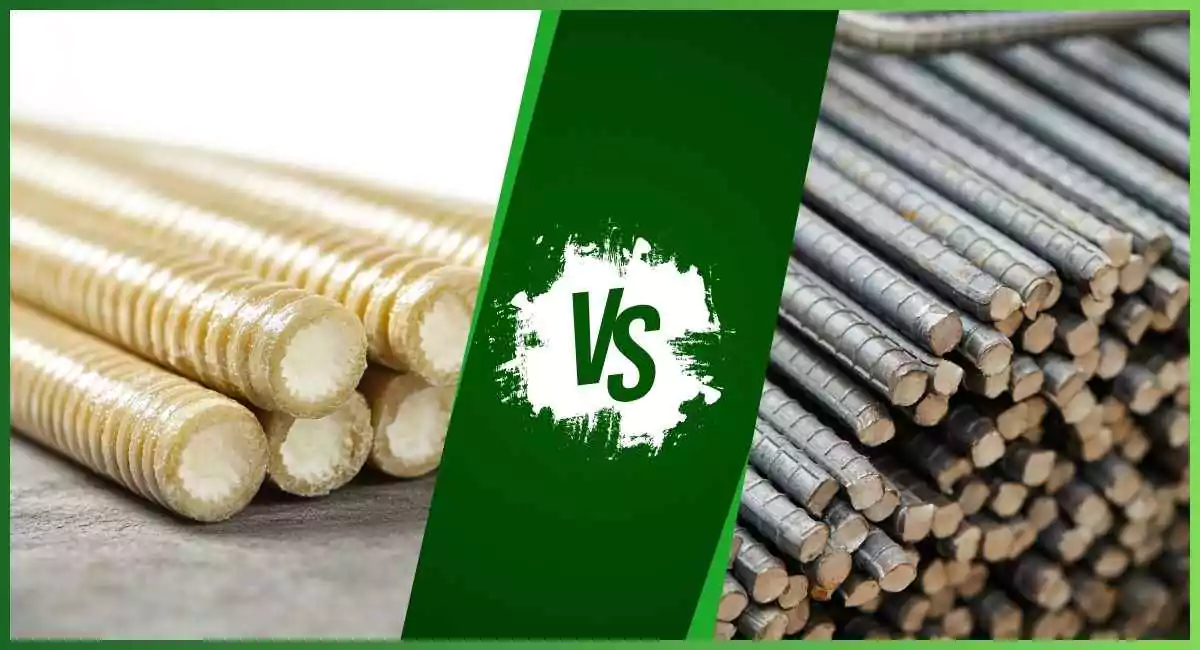
GFRP rebar offers compelling advantages over steel in environments where corrosion is a concern — bridge decks, marine structures, chemical plants, and road infrastructure. Unlike steel, GFRP does not rust, offers tensile strength comparable to or exceeding steel, weighs only one-quarter of steel, and provides excellent fatigue resistance. These properties make it particularly attractive for US infrastructure projects where the Federal Highway Administration and state DOTs are actively seeking longer-lasting, lower-maintenance solutions.
The US market for GFRP rebar has grown substantially over the past decade, driven by ACI 440.11 code adoption and increasing awareness of lifecycle cost benefits. With multiple certified manufacturers and distributors now serving the American market, procurement has become more accessible than ever before.
Why Choose GFRP Rebar for US Infrastructure Projects
Why choose GFRP rebar for US infrastructure projects? The answer lies in the material’s exceptional durability and lifecycle economics. American infrastructure faces a $2 trillion+ backlog of aging roads, bridges, and marine structures, many of which are deteriorating due to steel rebar corrosion. GFRP rebar offers a proven solution that extends service life from 25–30 years (steel-reinforced structures with de-icing salts) to 75–100 years.
Corrosion Resistance in Harsh Environments
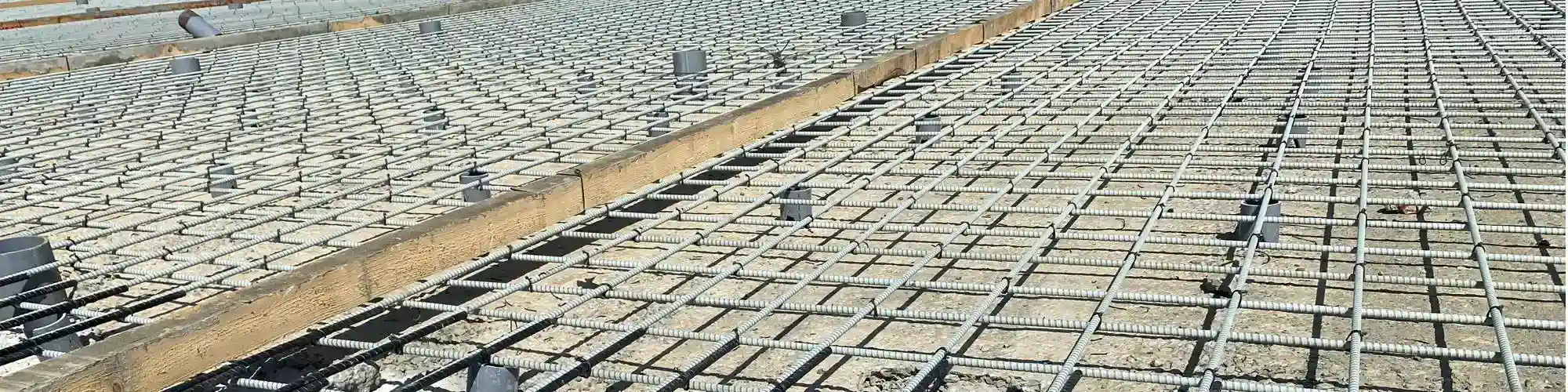
The single biggest advantage of GFRP rebar in the US is its complete immunity to electrochemical corrosion. In American climates where road de-icing salts, coastal salt spray, or chemical exposure are factors, steel reinforcement rusts, expands, and spalls concrete. GFRP eliminates this degradation mechanism entirely, making it the preferred choice for bridge decks, parking garages, seawalls, and wastewater treatment facilities across the United States.
High Tensile Strength and Lightweight Design
GFRP rebar exhibits tensile strength of 90–120 ksi (620–830 MPa) — roughly twice that of Grade 60 steel — while weighing only 1.5 lb/ft³ compared to steel’s 7.8 lb/ft³. This weight advantage reduces transportation costs and allows smaller installation crews. For US contractors, this translates directly to lower labor costs and faster project completion.
Lifecycle Cost Savings
| Factor | Steel Rebar | GFRP Rebar |
|---|---|---|
| Initial material cost | Lower | Higher (2–3x) |
| Installation labor | Standard | 10–20% lower |
| Maintenance over 50 years | $50–100/m² | $0–5/m² |
| Service life (bridge deck with salt) | 25–30 years | 75–100 years |
| Lifecycle cost (NPV) | Baseline | 20–40% lower |
When evaluated on a 75-year lifecycle basis, GFRP rebar consistently delivers 20–40% lower total cost than steel in corrosive environments. State DOTs including Ohio, Virginia, California, Florida, and New York have all adopted GFRP for specific infrastructure applications based on these economics.
ASTM and ACI Standards for GFRP Rebar in the United States
Understanding the regulatory framework for GFRP rebar in the USA is critical for specifiers, engineers, and procurement professionals. The United States has established comprehensive standards that govern the manufacturing, testing, and installation of GFRP reinforcement in concrete structures.
ASTM D7957 / D7957M — Standard Specification for GFRP Rebar
The ASTM standard for GFRP rebar used in the USA is D7957 (Standard Specification for Solid Round Glass Fiber Reinforced Polymer Bars for Concrete Reinforcement). This specification covers material requirements, dimensional tolerances, mechanical properties, and test methods for GFRP bars. Key requirements include:
- Glass fiber content: Minimum 70% by weight
- Tensile properties: Guaranteed tensile strength per bar size, with minimum modulus of elasticity of 6,000 ksi (41.4 GPa)
- Shear strength: Minimum 20% of tensile strength
- Bond strength: Minimum 1,600 psi for sand-coated bars
- Durability: Alkali resistance testing per ASTM D7705
Manufacturers supplying GFRP rebar to US projects must provide third-party certification demonstrating compliance with ASTM D7957. ICC-ES evaluation reports (AC454) are commonly used to verify code compliance in the American market.
ACI 440.11 — Building Code Requirements for GFRP Rebar
The ACI code requirements for GFRP rebar in the United States are defined in ACI 440.11-22 (Building Code Requirements for Structural Concrete Reinforced with Glass Fiber-Reinforced Polymer Bars). This code, referenced by the International Building Code (IBC), provides design and construction requirements including:
- Design philosophy: Serviceability-based design with strength verification
- Minimum reinforcement: 1.33 times the cracking moment
- Crack control: Maximum crack width of 0.028 in (0.7 mm) for interior exposure
- Development length: Specific equations based on bar diameter and concrete strength
- Shear design: Modified provisions accounting for lower transverse strength of GFRP
ACI 440.11 is now adopted by most US building jurisdictions and is the primary design standard for structural engineers specifying GFRP rebar in American construction projects. State DOTs may also reference AASHTO LRFD Bridge Design Guide Specifications for GFRP-Reinforced Concrete.
Where to Buy GFRP Rebar in the USA: Suppliers and Certified Distributors
Where to buy GFRP rebar in the USA? This is the most common question from American contractors and engineers transitioning to composite reinforcement. The US market has several established channels for sourcing GFRP rebar, including domestic manufacturers, international suppliers with US distribution networks, and specialized distributors.
Types of GFRP Rebar Suppliers Serving the US Market
- Domestic manufacturers: US-based production facilities offering made-in-USA GFRP rebar with local quality control and faster lead times
- International suppliers: Overseas manufacturers shipping directly to US ports, often offering competitive pricing for large-volume orders
- Certified GFRP rebar distributors in America: Authorized resellers who stock inventory and provide local technical support
- Online marketplaces: Some suppliers now offer direct online ordering for standard sizes and quantities
Finding a Reliable Supplier for the US Market
When evaluating a GFRP reinforcement supplier in the US for American projects, consider the following criteria. A trusted GFRP rebar USA supplier should provide certification and technical support:
| Criterion | Why It Matters |
|---|---|
| ASTM D7957 certification | Ensures material meets US code requirements and is approved for building permit applications |
| ICC-ES evaluation report | Required by most US building departments for code compliance verification |
| Inventory availability | Stocked common sizes reduce lead times from 8–12 weeks to 1–2 weeks |
| Technical support | Engineering assistance for design, detailing, and installation guidance |
| Shipping network | Nationwide delivery capability with experience in LTL and full truckload shipments |
| References | Previous US infrastructure projects demonstrating reliable delivery and quality |
Certified GFRP Rebar Distributors in America
Some of the recognized certified GFRP rebar distributors in America include companies with established track records in supplying composite reinforcement to US infrastructure projects. A GFRP rebar USA distributor with ICC-ES listed products and ACI 440.11 design support can significantly simplify your procurement process. When you work with an established composite rebar distributor for American projects, you benefit from pre-vetted supply chains and reliable delivery schedules. GFRP Rebar Solutions offers a comprehensive supply chain that connects buyers with vetted, certified manufacturers and maintains inventory of common sizes in US distribution centers.
For large-scale infrastructure projects, many buyers work directly with a supplier partner who provides volume discounts, just-in-time delivery scheduling, and on-site technical representation. To purchase fiberglass rebar USA from a trusted source, contact GFRP Rebar Solutions for a quote. You can also buy GFRP rebar USA through our network of regional distributors serving all 50 states.
How to Import GFRP Rebar into the USA
How to import GFRP rebar into the USA? Many American buyers source GFRP rebar from international manufacturers, particularly from China, India, and Europe, where production capacity is substantial and pricing can be competitive. Importing requires careful attention to customs procedures, quality verification, and compliance with US building codes.
HS Code and Customs Classification
GFRP rebar is classified under HS code 7019.90 (Glass Fibers and Articles Thereof) for US customs purposes. Importers should work with a licensed customs broker to ensure proper classification and duty calculation. Current duty rates for GFRP rebar entering the USA typically range from 3–6% depending on the specific product classification and country of origin.
Quality Verification for Imported Products
When importing, quality assurance is paramount. Reputable suppliers who import products into the US market typically provide:
- Third-party ASTM D7957 testing reports from accredited laboratories (e.g., ICC-ES, UL)
- Certificate of Conformance for each production lot
- Tensile, shear, and bond strength data for each bar size
- Material traceability documentation from raw fiber through finished product
It is strongly recommended to request samples for pre-shipment testing from a US-based laboratory before committing to large-volume imports.
Shipping and Logistics
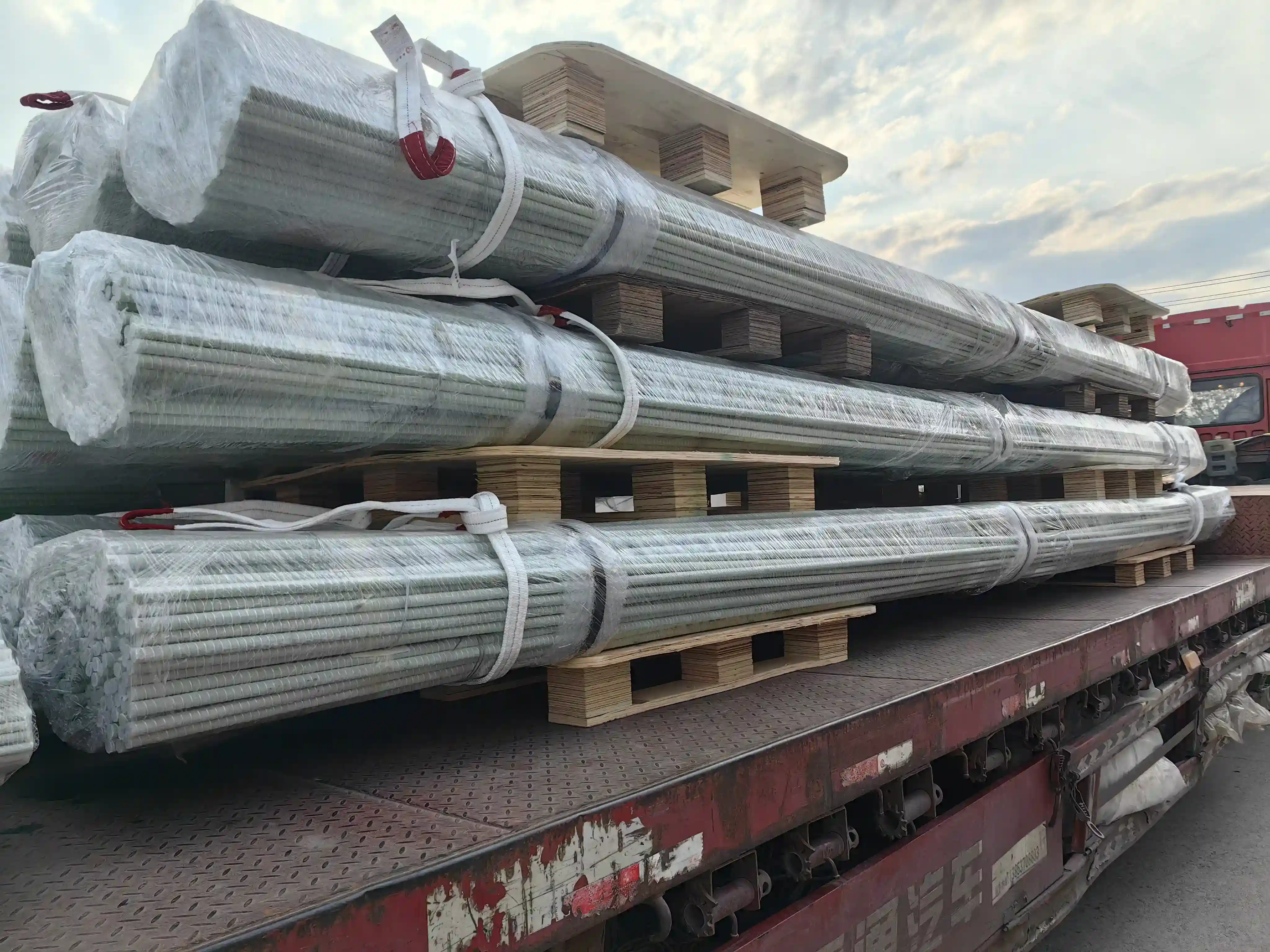
Shipping and customs considerations for GFRP rebar imports include:
- Container loading: 20-foot containers hold approximately 15–20 tons of GFRP rebar; 40-foot containers hold 25–30 tons
- Lead time: Standard sea freight from Asia to US West Coast ports takes 18–25 days; from Europe to East Coast ports takes 14–20 days
- Port options: Los Angeles/Long Beach, Seattle, New York/New Jersey, Savannah, Houston are common entry points
- Inland distribution: Once customs-cleared, material moves via rail or truck to regional distribution centers
Import Checklist
| Step | Action |
|---|---|
| 1 | Verify supplier’s ASTM D7957 certification and ICC-ES listing |
| 2 | Request material test reports and compliance documentation |
| 3 | Engage a licensed US customs broker for HS code classification |
| 4 | Arrange marine cargo insurance covering the full invoice value |
| 5 | Confirm delivery terms (FOB, CIF, DDP) with your supplier |
| 6 | Plan port-of-entry inspection if required by your quality plan |
Working with an experienced distributor that handles import logistics can eliminate many of these complexities. Many buyers prefer to source through established distributors who manage the entire supply chain from factory to jobsite.
GFRP Rebar USA Pricing Guide
Understanding GFRP rebar USA price trends is essential for accurate project budgeting. Unlike steel rebar, which has transparent commodity pricing, GFRP rebar pricing varies significantly based on specifications, order volume, and supply chain complexity.
Current Price Ranges for the US Market
| Bar Size | Domestic Supplier (USD/ft) | Imported (USD/ft, FOB) | Imported (USD/ft, delivered) |
|---|---|---|---|
| #3 (10mm / 0.375 in) | $0.80–1.20 | $0.40–0.60 | $0.55–0.80 |
| #4 (12.7mm / 0.5 in) | $1.00–1.50 | $0.55–0.80 | $0.75–1.10 |
| #5 (15.9mm / 0.625 in) | $1.30–2.00 | $0.70–1.10 | $0.95–1.40 |
| #6 (19.1mm / 0.75 in) | $1.80–2.80 | $1.00–1.50 | $1.30–1.90 |
Note: Prices are estimates as of mid-2026 and may vary based on market conditions, fiber glass prices, shipping costs, and order quantities. Volume discounts typically apply for orders exceeding 10,000 linear feet.
Factors Affecting GFRP Rebar Pricing in the USA
- Order volume: Larger orders secure better per-unit pricing. Full container loads (20–30 tons) offer the best economics
- Bar diameter: Larger diameter bars require more material and have higher per-foot costs
- Surface treatment: Sand-coated bars cost more than ribbed or helically-wrapped alternatives
- Certification level: ICC-ES certified products command a premium over non-certified alternatives
- Delivery location: Freight costs vary significantly by distance from the supplier or port of entry
- Market conditions: Fiber glass prices, shipping container availability, and tariffs affect final pricing
Total Cost of Ownership Perspective
While the initial material cost is 2–3 times higher than steel, the total installed cost premium is typically only 15–40% when accounting for labor savings. The GFRP rebar USA price premium narrows significantly when you factor in reduced transportation costs, faster installation, and zero maintenance. On a lifecycle basis, GFRP rebar delivers 20–40% savings in corrosive environments. For buyers looking to source at the best price, consolidating orders with a distributor that combines multiple clients’ requirements can unlock volume pricing not available to individual purchasers.
Conclusion: Securing Your GFRP Rebar Supply in the USA
The US market offers compelling opportunities for construction professionals seeking corrosion-resistant, long-lasting concrete reinforcement solutions. With established ASTM D7957 standards, ACI 440.11 code adoption, and a growing network of certified suppliers and distributors, sourcing GFRP rebar for American projects has never been more straightforward.
Whether you are a state DOT specifying reinforcement for a bridge deck, a contractor building a seawall in Florida, or an engineer designing a chemical plant in Texas, GFRP rebar provides a proven alternative to traditional steel. The key to successful procurement lies in working with qualified suppliers who understand the regulatory landscape, can provide certified materials, and offer reliable delivery.
For projects requiring imported material, understanding the import process, customs requirements, and shipping logistics ensures smooth procurement. For those preferring domestic sourcing, established distributors maintain inventory of common sizes and provide technical support for design and installation.
Ready to source GFRP rebar for your next US project? GFRP Rebar Solutions connects buyers with certified manufacturers and distributors serving the American market. Contact us for current pricing, availability, and technical specifications tailored to your specific application.